Cabinets of Wonder — Professor Emily Conrad
Field Expedition: NYSCI
Focus: Connecting to the Readings
I paid 15$ to park my car and walked up to the New York Hall of Science. From a distance, the highway even, its presence is felt, between the rockets and permanently under construction remnants of the worlds fair. "This feels like a science center," an underfunded relic of the more idealistic 60's. The building is a collection of different shapes, add ons. Different heights of roofs. As I crossed the parking lot towards the entrance, A mother was walking in with two children, both crying, complaining of the freezing weather.
It was easy to get a ticket, members have a way to skip the line, normal customers go the other way into a desky lobby with three attendants, all waiting to collect your fare. I paid and asked "where should I start?" The attendant, a young man, briefly explained the main collection was through the hallway behind me. I asked, is Mathematica still here? He said yes, it's in the main collection. In I went.
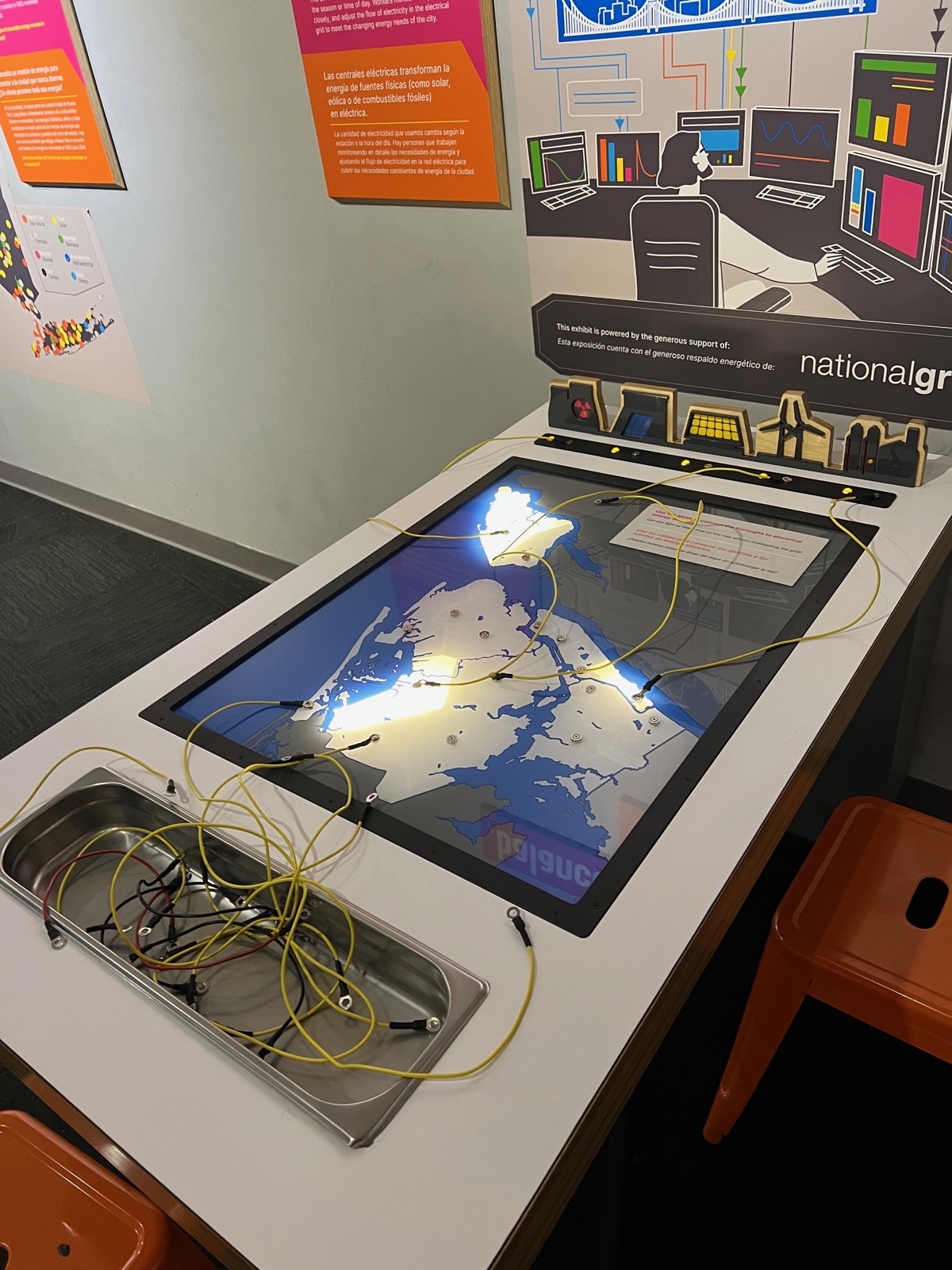
The main hall is a large open space with different exhibits arranged around the perimeter on a balcony. Below me was an interpretive center. I walked through exhibits about energy in the city, then explorations of heat and light. Some aspects of this collection were in good condition, but anything that could be abused was. There were a few different interactive explorative experiences dedicated to connecting circuits and generating power with the body. It was fun to see the human touch of fabrication here.
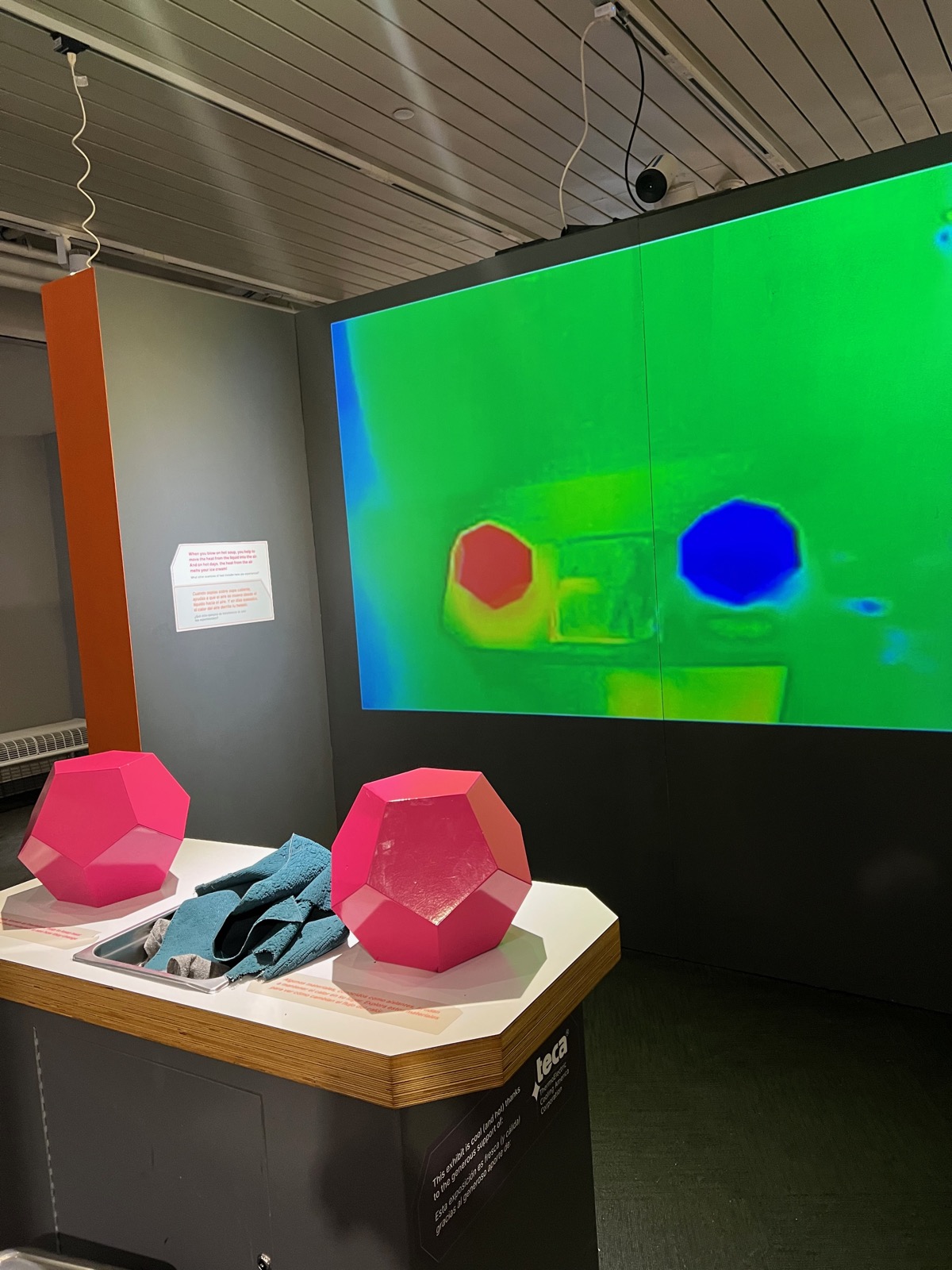
I feel this is experience is a very intuitive way to learn about and understand heat and insolators. Visitors can touch both red objects to calibrate themselves to the sensitivity of the colors on the screen. Really cool.
Quickly, I got to Mathematica. There was a ton of text, which I totally skipped.
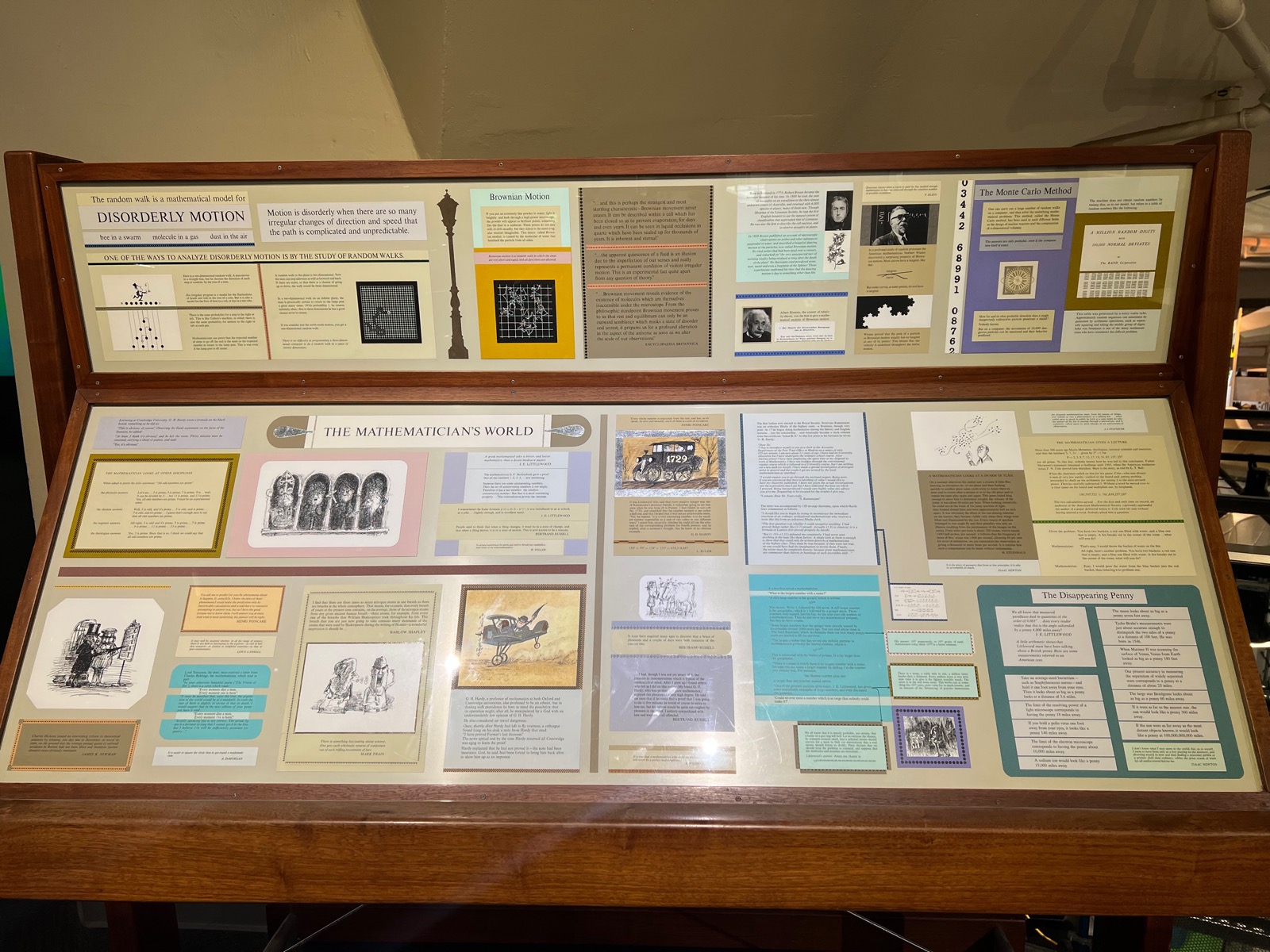
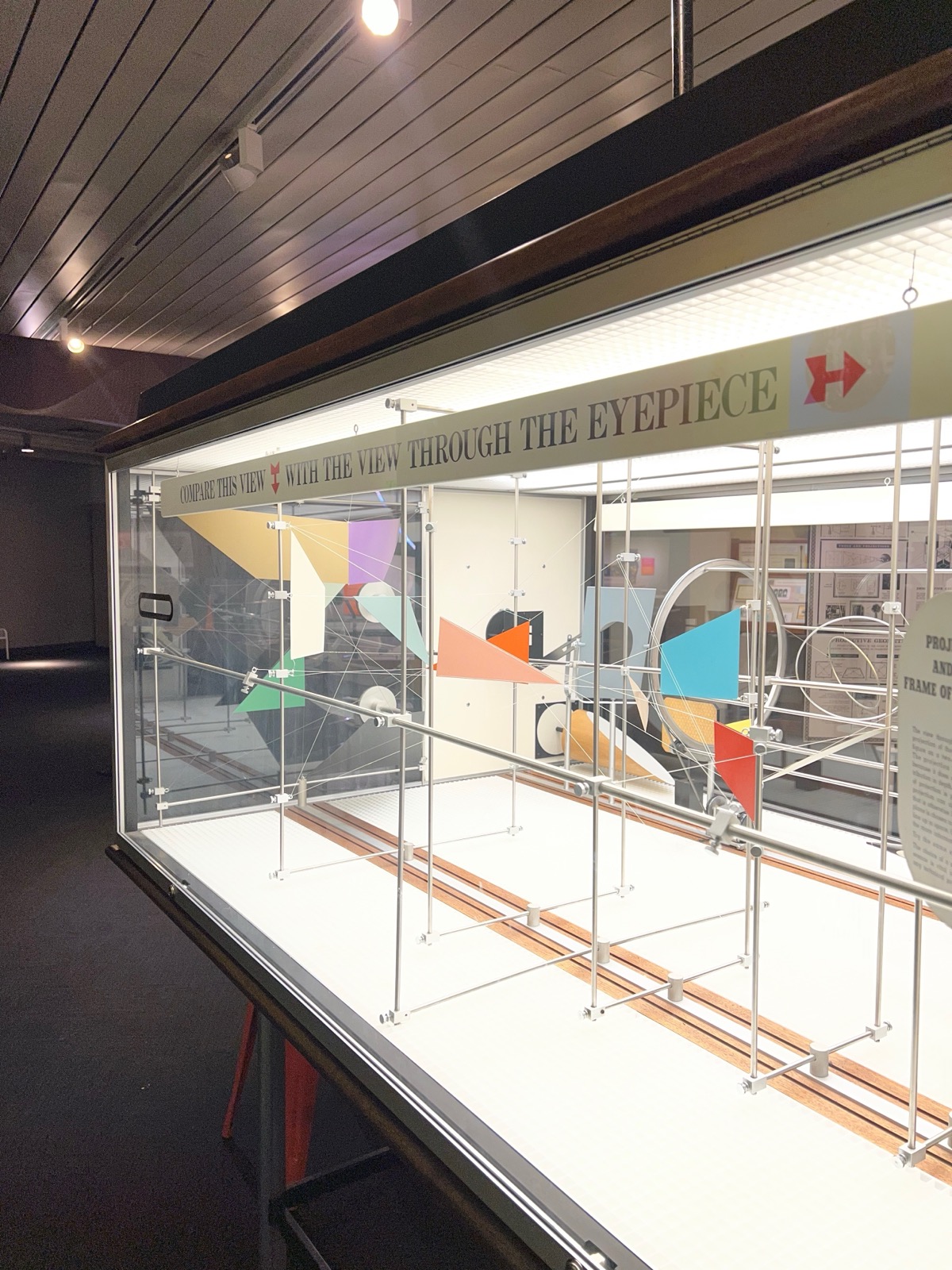
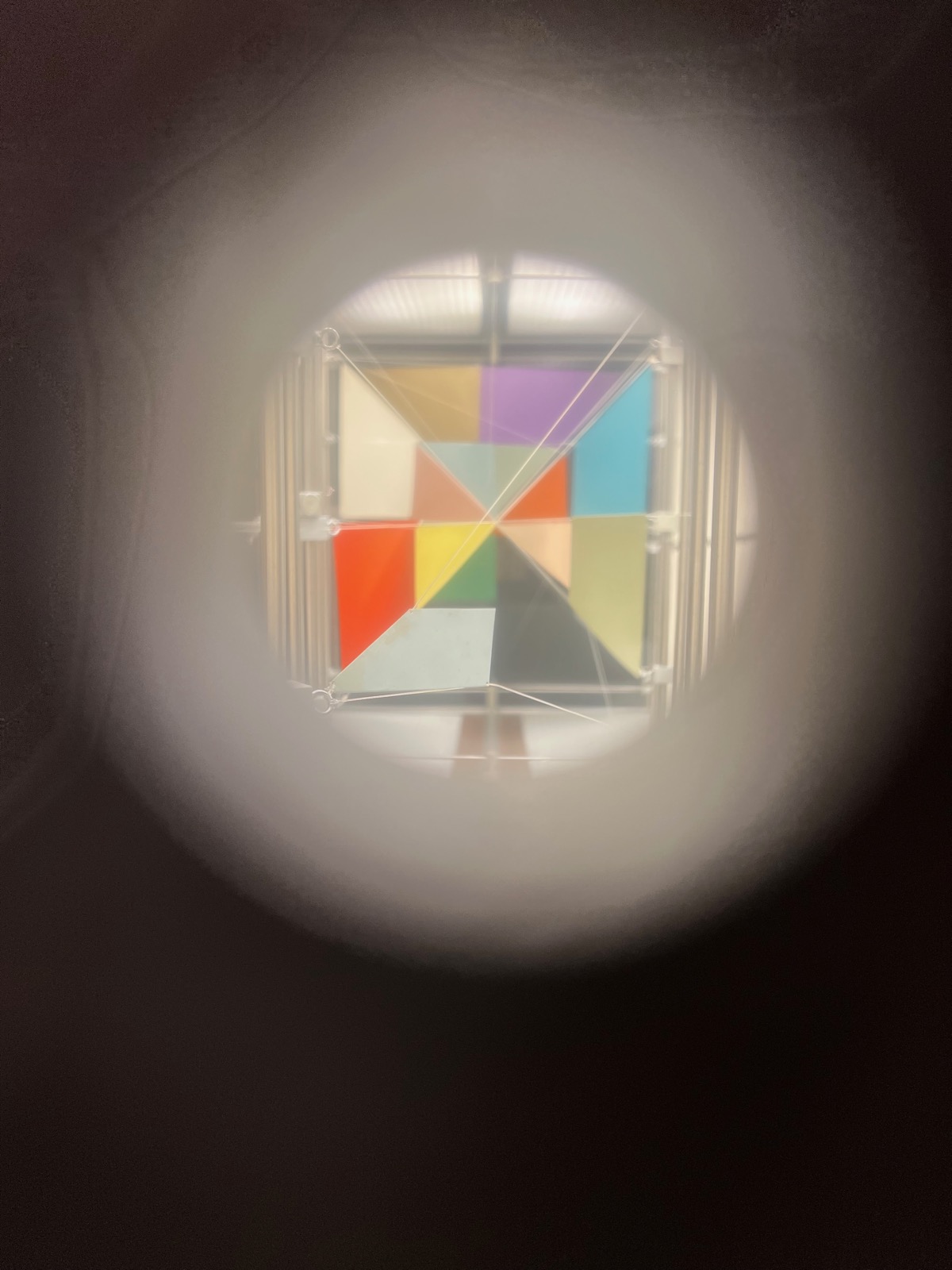
The work of the Eames was beautiful, and the concepts they explored were interesting, but it felt early and dated. I enjoyed the perspective play, seeing things from the side and then put together from the front.
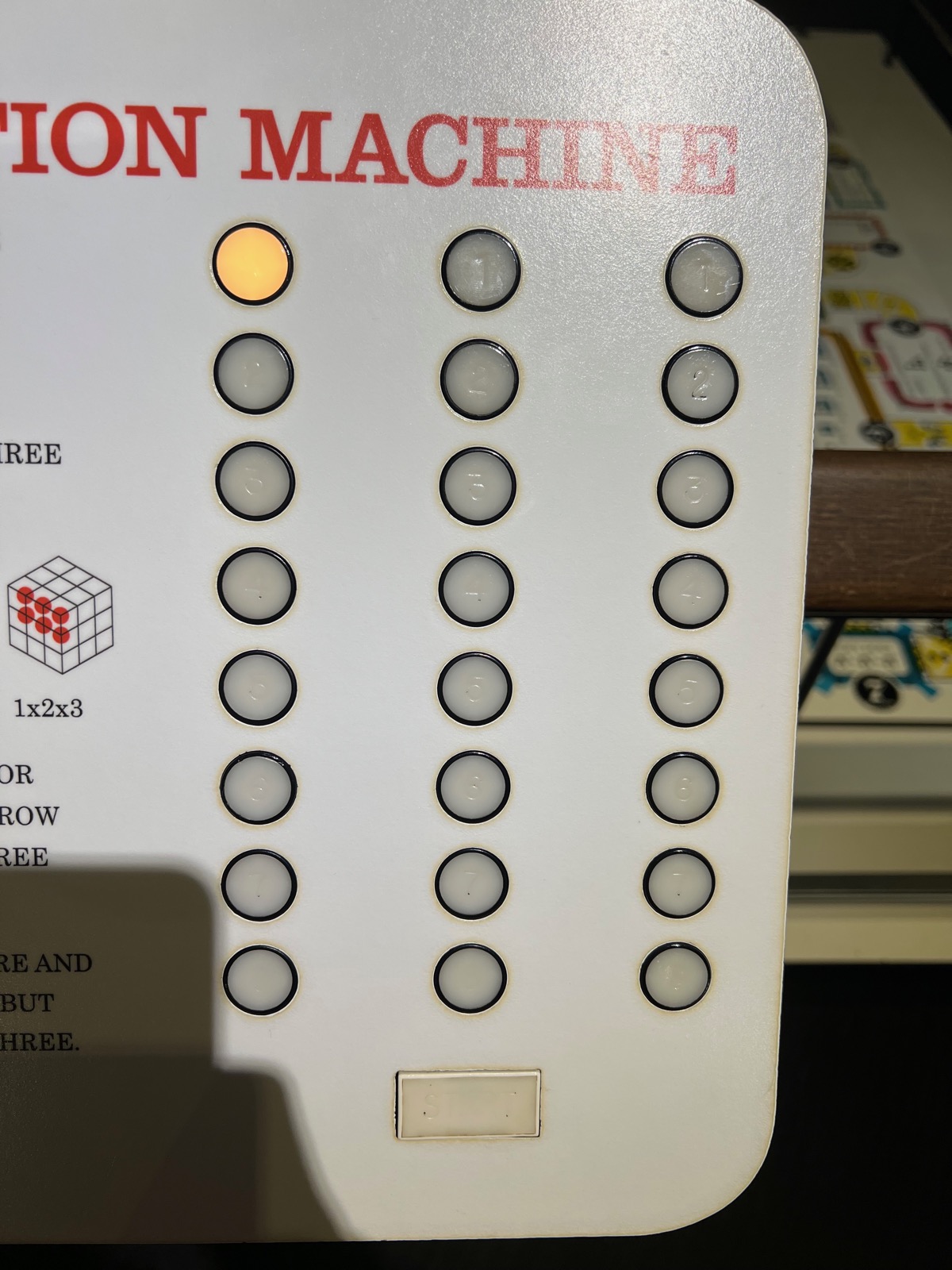
I enjoyed the multiplication machine, even though it was super broken and faded, the numbers rubbed off by so many great fingers.
Pressing a button and seeing lights flash together in the 10x10 grid was so satisfying, until sections of the light didn't come on. I felt like I was exploring its defects as much as its function. I also liked the gravity well, where some of the only families I saw in the area were gathered around, watching the rolling balls. I think motion is so captivating, and when it can be a tool for teaching, all the better. Our brains are sooooooo soooo soooooooooo tuned to lock in on things which "go the right speed."
As I kept moving, I was quickly overwhelmed, how do I describe every experience which was presented? I skipped past most of body plus because it was text heavy and I'm motion biased. I did stop to play the mono ski game, an experience designed to simulate the experience of being a disabled skier in adaptive gear.
Sponsored by the devil
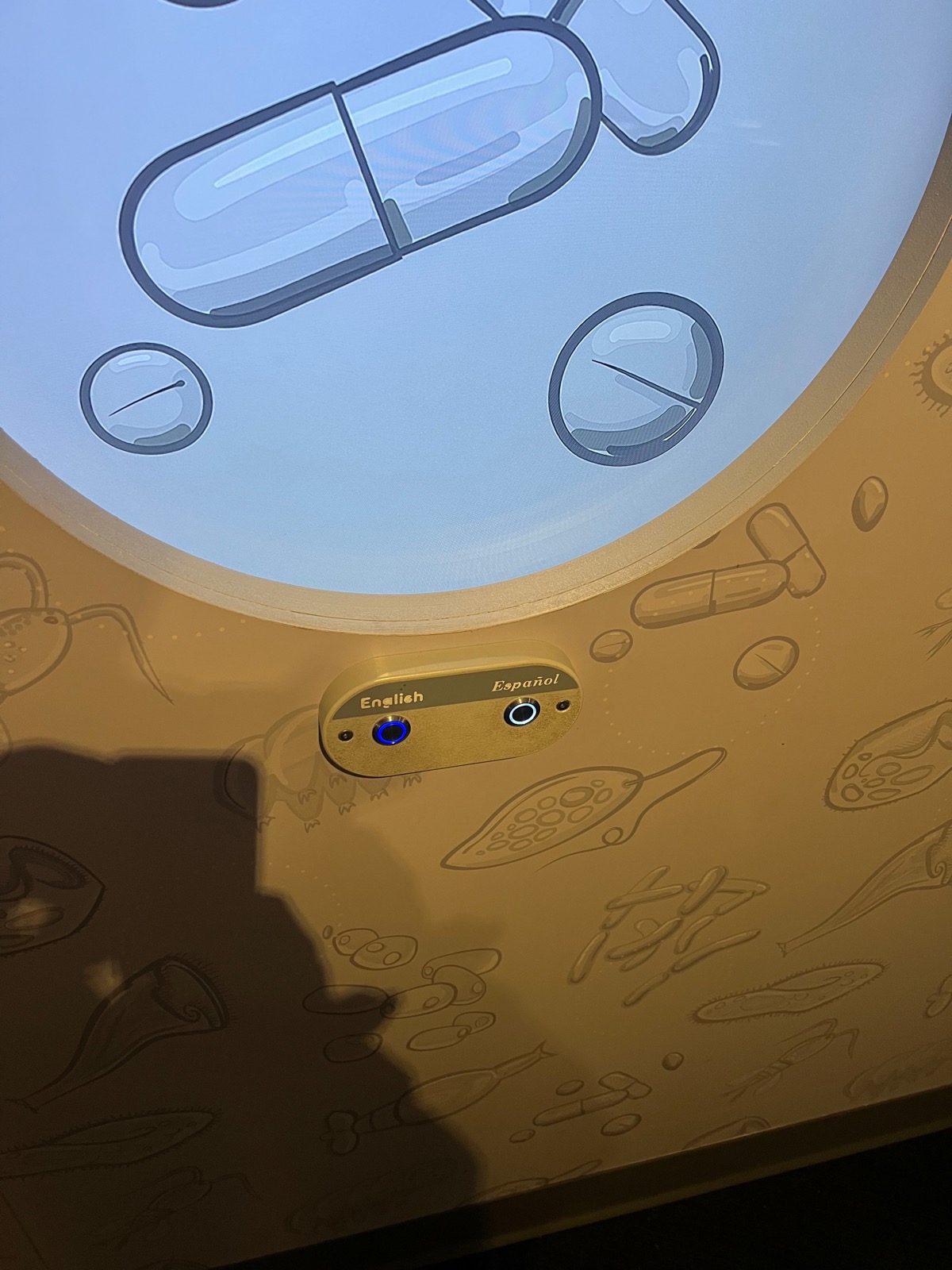
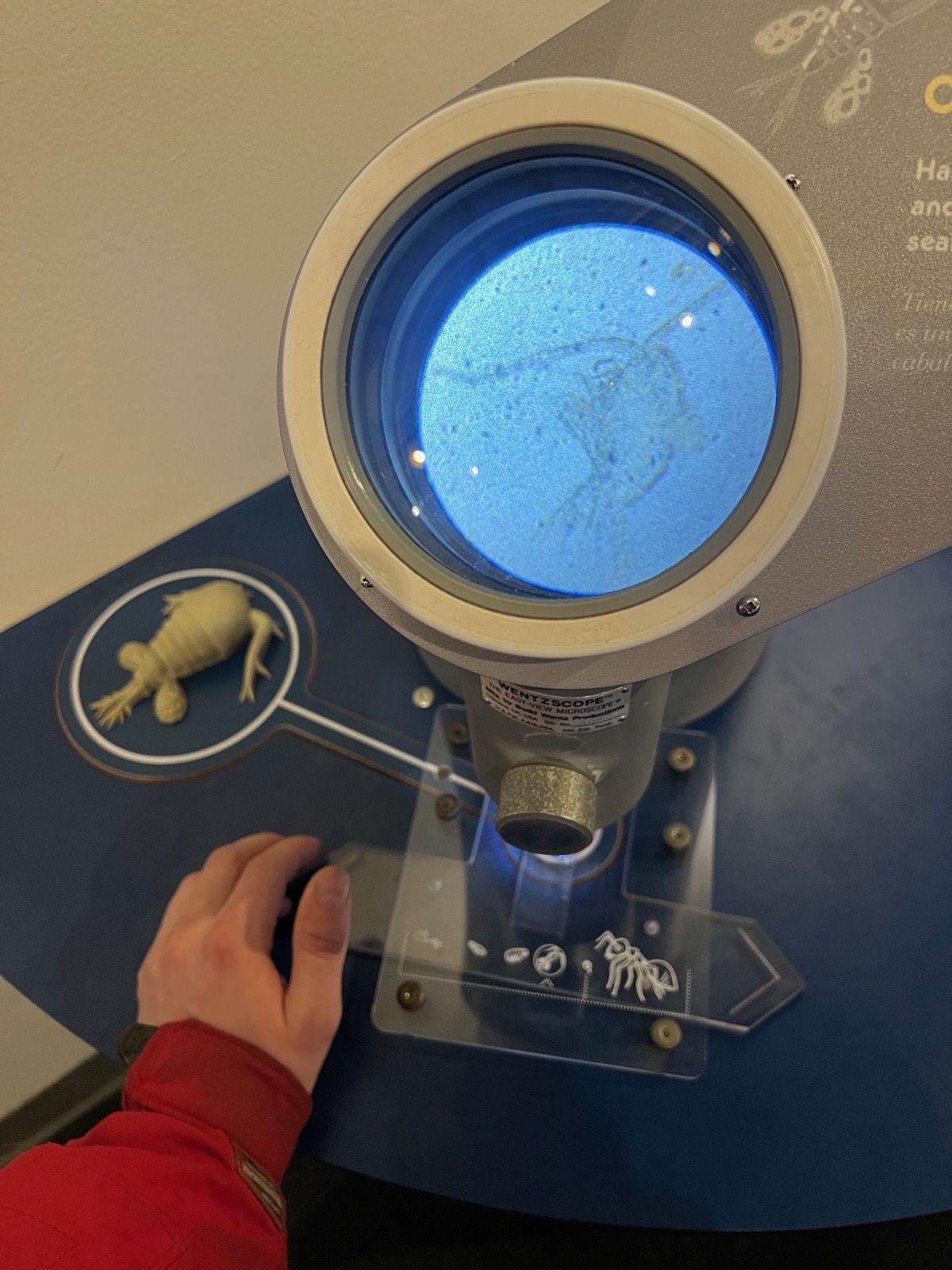
One experience I felt was lacking, invisible worlds, I think that's what it was called. It's all about germs and other small creatures. There were a lot of microscopes, but it was sort of difficult to use them and to interpret what you saw. One thing I really liked here was the little sculptural representations of the tiny invisible things we were trying to see. Getting to touch a replica of such a little tiny thing was awesome and totally perspective shifting. When I did get a microscope to show me its treasure, I cried out. There was the thing I saw in grey plastic on the desk hand size before me, invisibly small! This section could have benefited from interpretation. A worker in the area would have been helpful to guide me to interesting things to see.
The next section, below the balcony, was interpretive heaven. I'm not even sure what all the workshops were for, but there was a makerspace, among other things. This was also where the scientific presentations took place. This area was well staffed and well occupied. Even though it was noon on Sunday, and the science center had only been open an hour, there were significant amounts of children here with their parents. This area seemed to be the site of significant investment and reorientation towards hands on interpretation focused engagement.
One thing in this area caught my eye, (I was not exactly lining up to explore the makerspace experience, given my advanced age) a kinetic chain sculpture by Norman Tuck. This was a physics lesson in an artistic form. By touching the chain, ripples moved back and forth across its length. It was mesmerizing, so much so that I was interrupted while playing with it by a child who ran up and couldn't help themselves. This happened to me once later, and I take it as a mark of good quality. When kids can't help themselves but to touch and explore something, that's good design. This type of thing, the making visible of phenomena which enchant the world through interactive sculpture, is really my jam. It's so intuitive and direct and really opens the mind to wonder. That's the greatest gift you can get from a science museum, the feeling of wonder. From here I walked into the bathroom, which was also nice.
Moving on, I went back across the entrance towards the City Works installation. First, I crossed by "The Big Bubble Experiment" which was jam freakin packed. More kids than I had seen in all of the core section ran around trying the different forms of bubble creation. I wished I could have gone along in, but it was too creepy for a freshly 28yo man to join in the fun. It reminded me of a broken part of Mathematica, a bubble experiment generating different forms with lines and surfaces, which was broken maybe just needing a little more water. Here was its direct descendant.
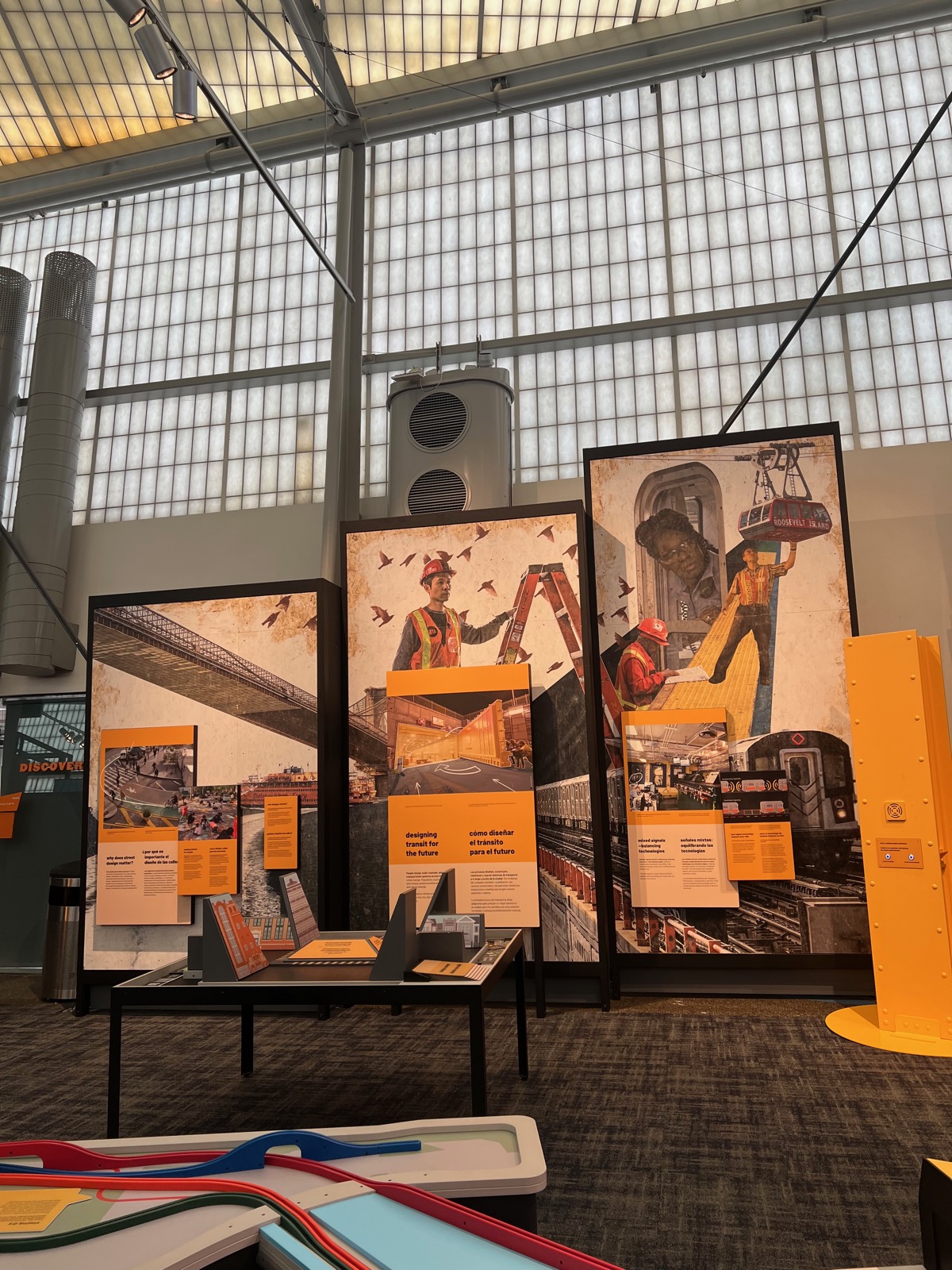
When I got to city works, it was packed. This installation was fresh, but sooo cheaply done. This was a critique only I saw though, as someone who's worked with graphics and neopixels and all that a bunch before. One thing that stood out to me, horrible paint bubbles on a cat and other painted objects. Whoever sprayed them was like, day 1 with a gun. Everyone else though, was thrilled. I thought the contents of the exhibit was awesome and must have felt like such a revelation for children to see their built environment broken down in such a way. There was a good mix of interaction and text with children eager to touch everything. I enjoyed the big display where different people could touch buttons and see streams of water leaving a city block to go down into the sewer, but I am also, just a sucker for neopixels.
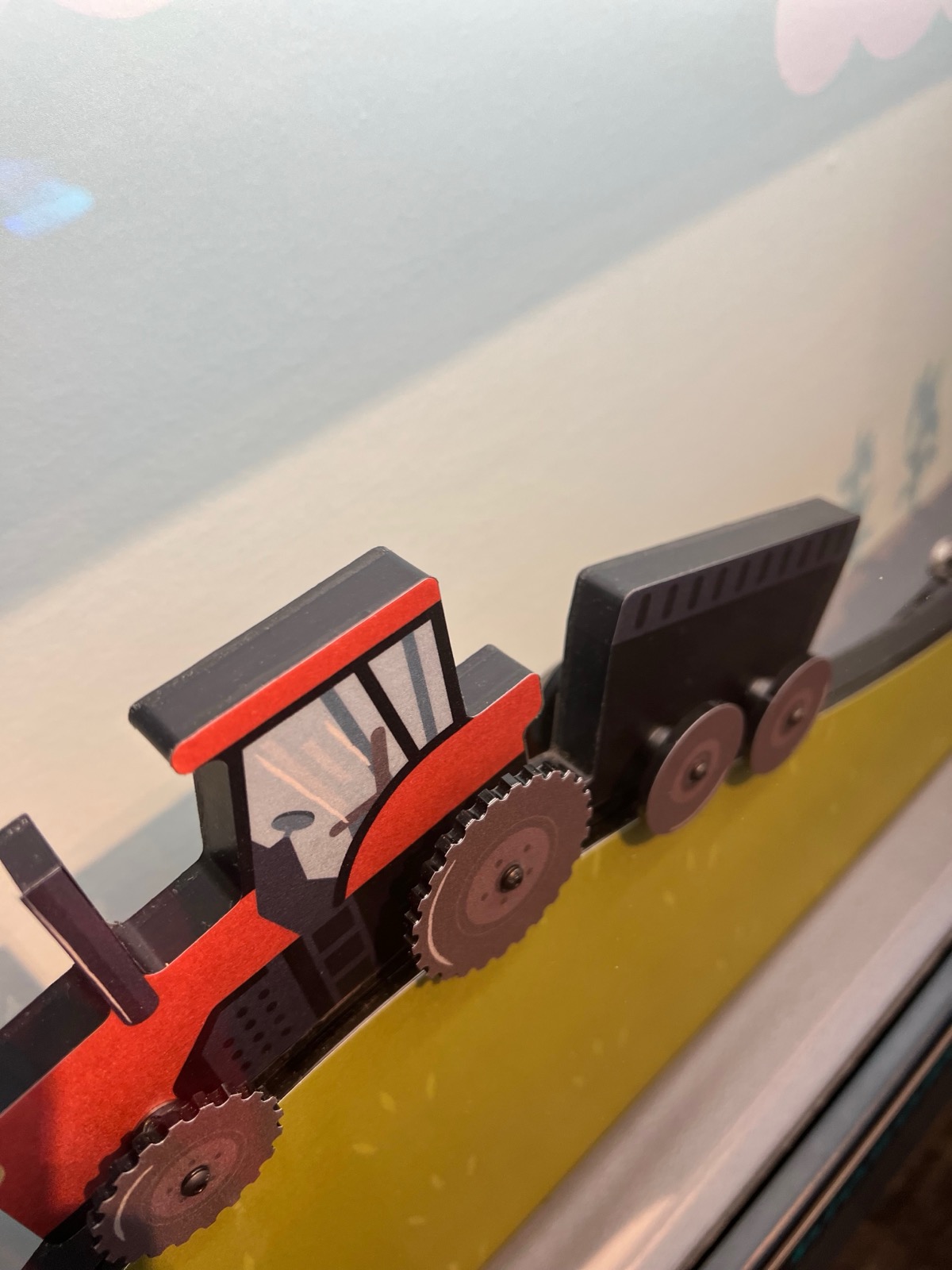
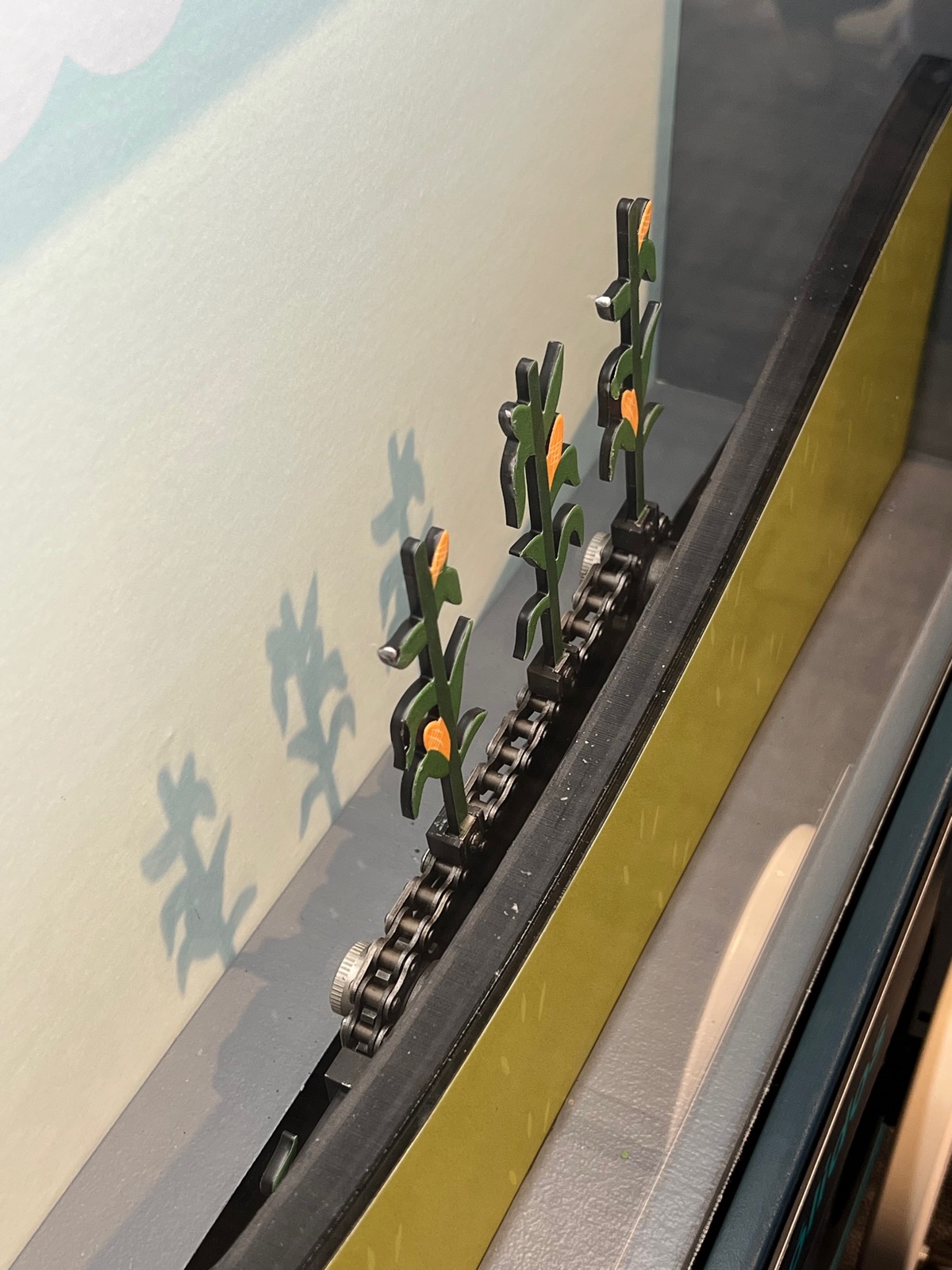
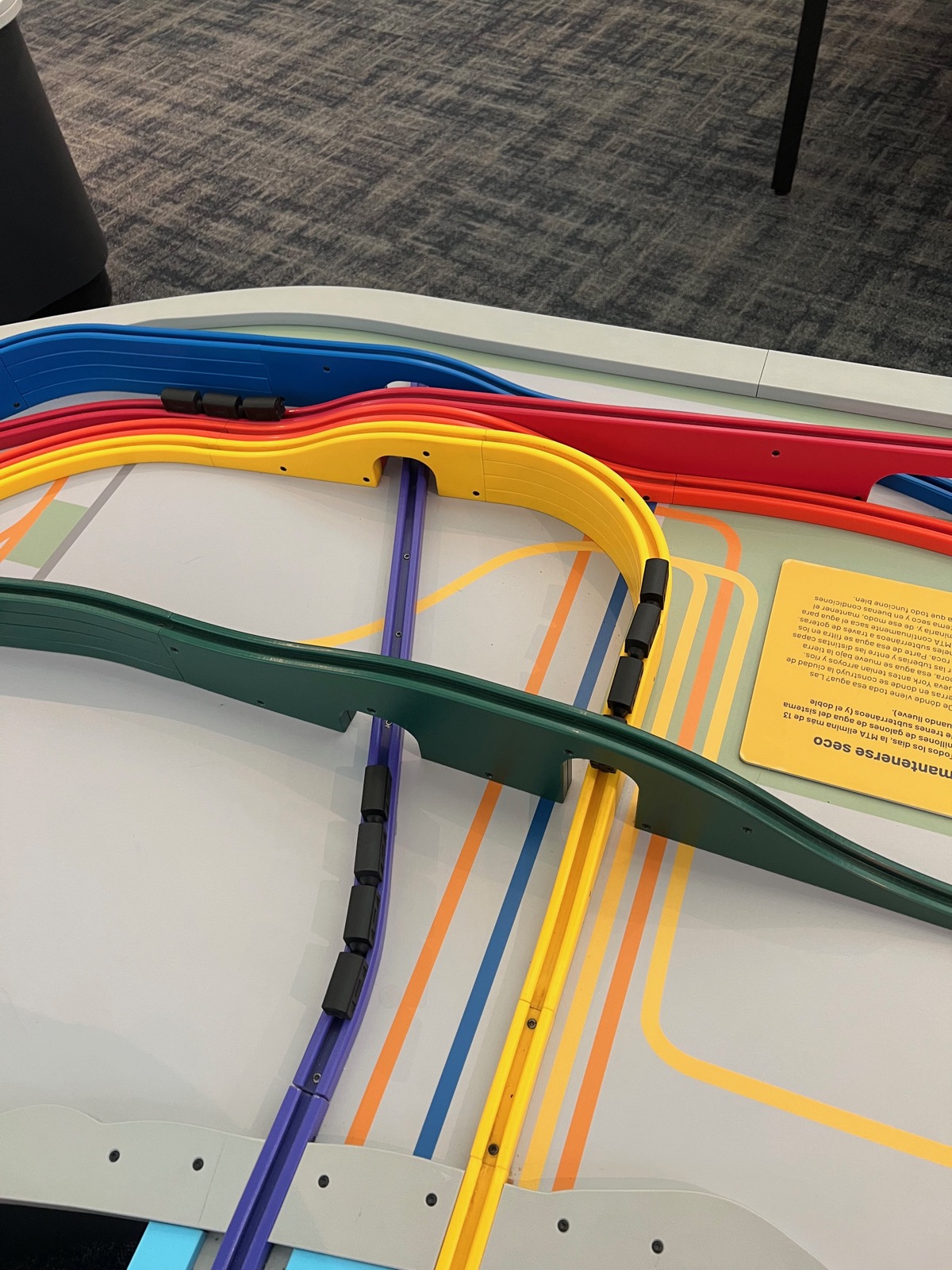
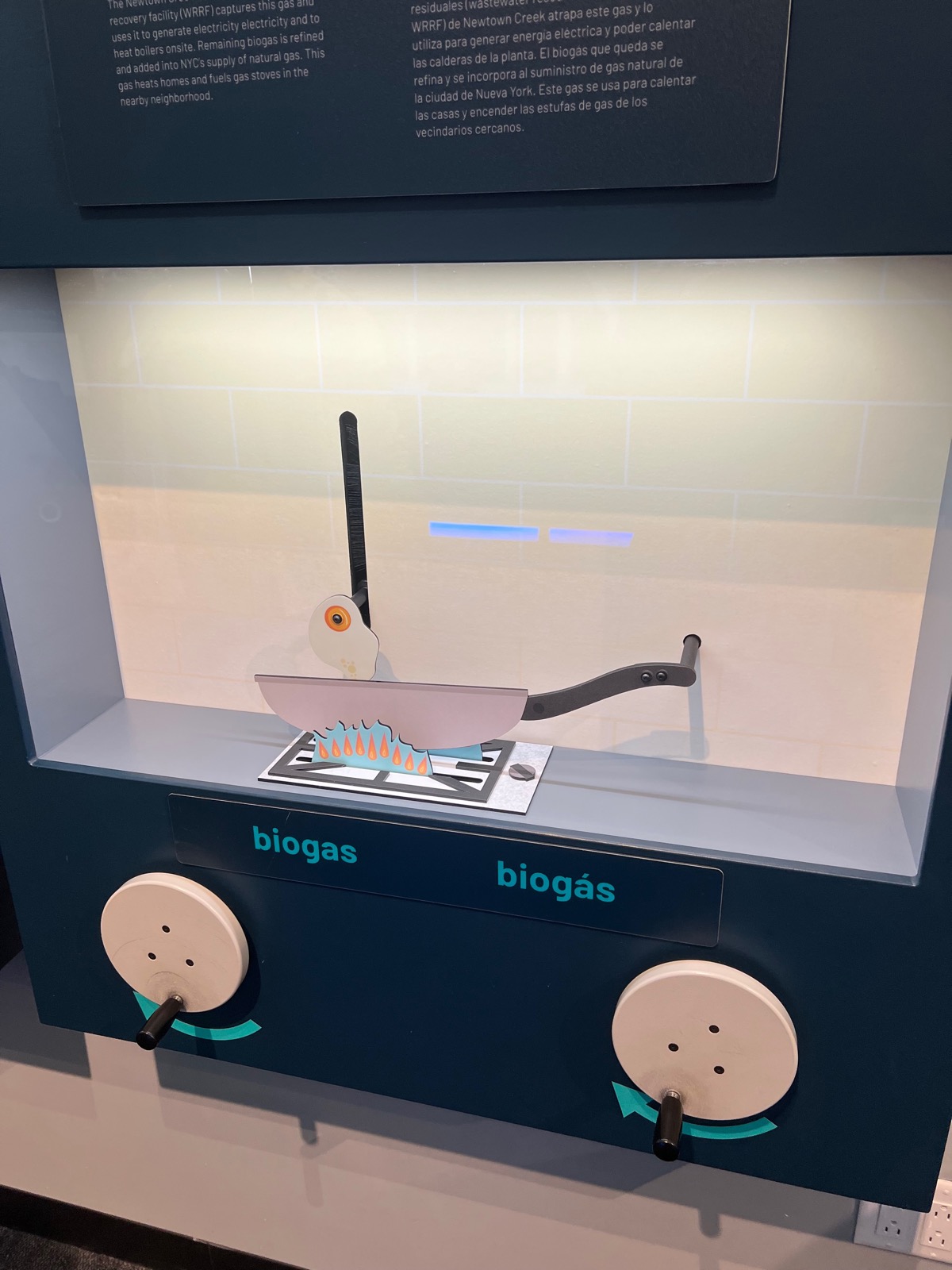
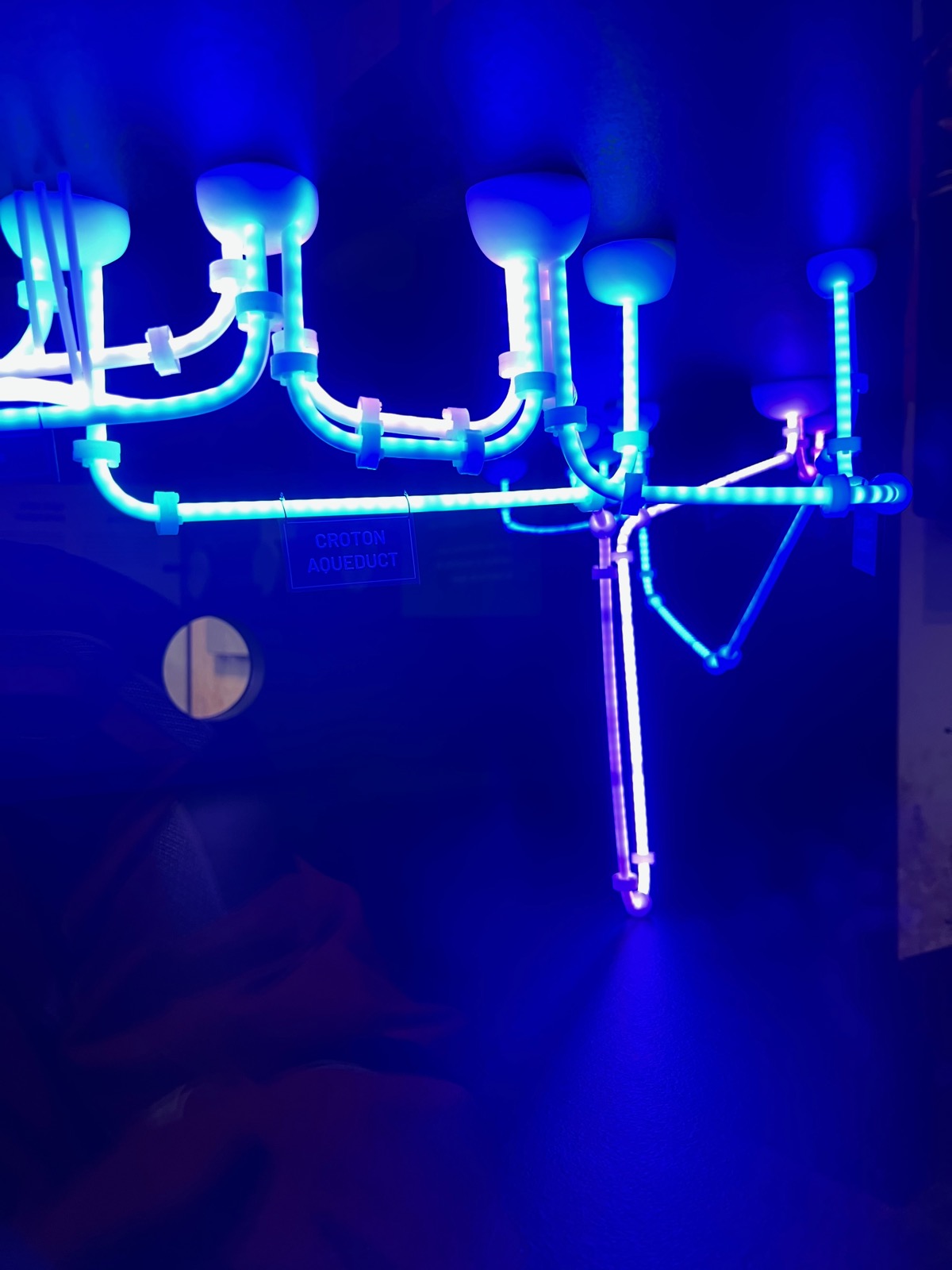
I liked this interaction design, pulling the chain to activate the lights. Its not clear why its a rope, but its the centerpiece of city works. This is the piece which displays where and how water flows. The way the graphics come out of hiding is really nice.
Finally, as I left city works, I wandered into Connected Worlds. Actually it was a little hard to find because "The Great Hall" is tucked off at the end of a hallway, nothing really pointing to it. This exhibit was a large projection mapped space where visitors could interact with a large scape digital ecosystem filled with imaginary plants and animals, all connected by various flows of water. There was a large control panel at the front and big projection mapped walls and a floor. In the center of the experience, a digital waterfall flowed down from the ceiling to the floor, trickling towards the different imaginary biomes. I found it unclear how to interact with the experience, and I feel like this experience was shared among visitors. One of the primary interactions was controlling the flow of water through moving these silver "logs" which laid about on the ground. Most of the people were sitting on them, content to watch the colorful objects move around on screen. Interpreters corrected their behavior, explaining that the logs were there to I moved some logs around but it was not clear the effect diverting water to a particular ecosystem had. I asked for help from the interpreters, "How do I Interact with this?" They explained that I could plant seeds by holding my hand up to the screen, and that I could chop down trees that had died in different environments. I tried these interactions but found them clunky and unresponsive. Planting seeds was done by holding your hand up and leaving it there for a time while the seed grew more and more powerful, "leveling up" into a stronger seed the longer you waited.
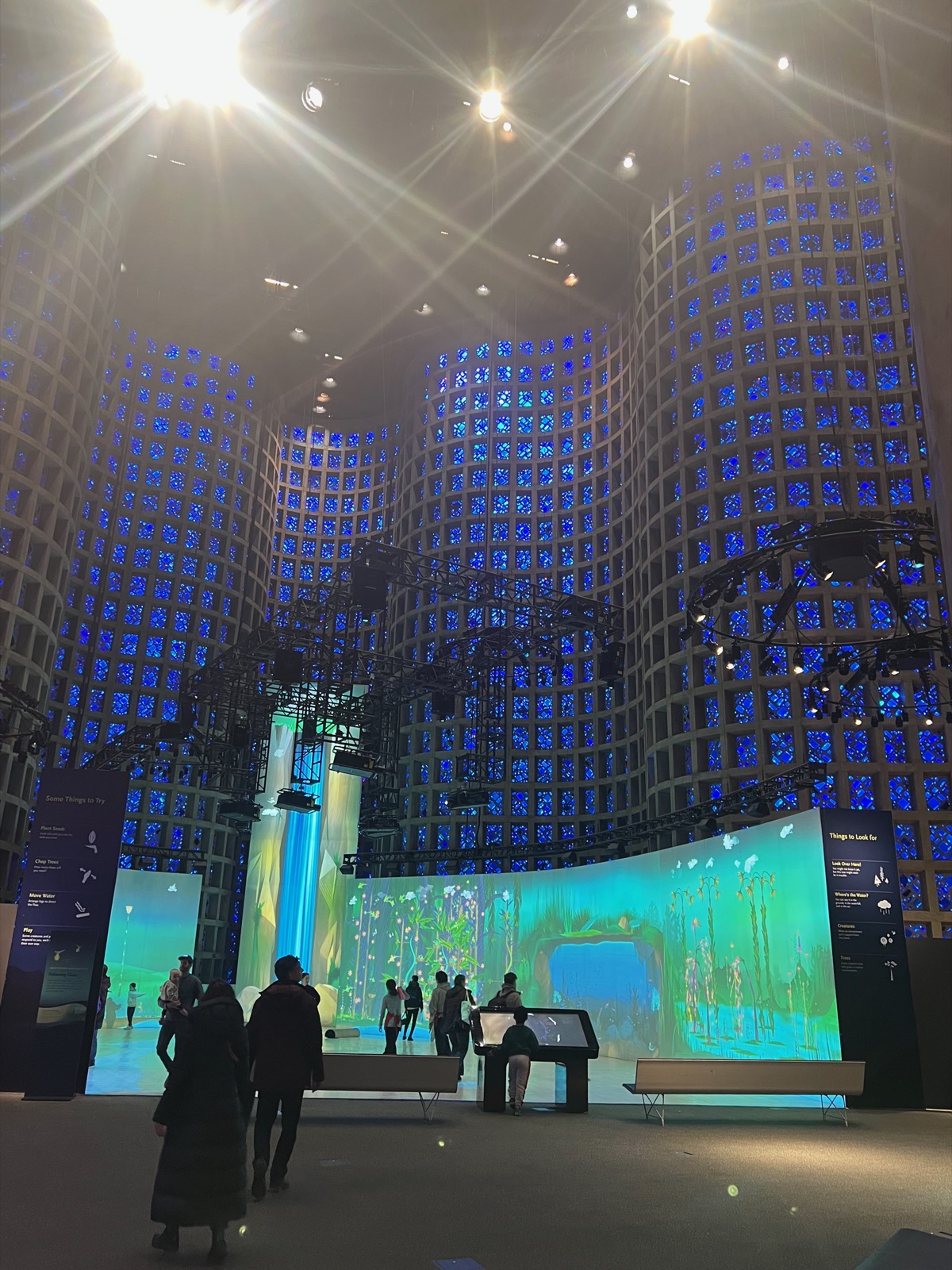
Connected worlds was everything I dislike in an exhibit. Clunky motion tracking, unclear interaction, half-baked gameplay, projection mapping, and sensor based interactions with jittery digital feedback. I really disliked it. I feel that the experience would be best if the visitor spend a few hours in the space, ideally with like, their classmates, and they had a primer talk before the experience. The 15 minutes I had to explore was insufficient. I however, didn't feel like I really wanted to stick around much longer. It's easy to see why it's attractive though, once deployed, there's virtually no maintenance required. Everything is immune to being broken because there's nothing to touch. You can also throw together something HUGE with minimal cost. The space is impressive, and the digital ecosystem is colorful and fun to watch. It's also something parents can feel good about their kids running around and playing with because there's no way they can't hurt or break something. In the much more physical City Works exhibit, parents had to restrain their kids from climbing all over the tables. Here there was no such problem, they could roll around, jump, whatever. It's just too bad the interaction is so unintuitive and half baked.
Really for the science museum, it comes down to cost to maintain their physical stuff. If I was God, I'd fund the science museum to maintain the physical interaction design we KNOW works. If Mathematica had been properly maintained over the years, it would have been visually striking, watching the bulbs light up and count themselves. Unfortunately, if you want Google to sponsor your exhibit, it needs to be digital slop.