Shared Minds — Professor Dan O'Sullivan
Body
Open the piece → www.ccfrost.com/SharedMinds/SMHW10
Reading
Stanford Seminar - Mind in Motion: How Action Shapes Thought
Grid cells
created in the brain while the rat is moving around
they are constantly being rewritten
they are created and tied to space
People do better thinking with their hands
gestures are more expressive than language
space is special
its essential for survival,
function or action trumps size in the body, the space around the body
we experience the world as a larger space outside of our mind.
we experience the world both top down and front on
When we see action we take special reaction in preparation, action hijacks
We construct we explore, and its full of distortions
this distortion changes our space
information in general is like a collage
we play a lot of wordless games
baby ball rolling all the way to basketball
Or minds go from thought to thought the way our feet go from place to place
maps can get made out of all kinds of things, just relationally
Ancient Graphics Show
people, animals and things
place and space
time event
number
Modern Graphics show the same things
Modern graphics began with the enlightenment
almost all graphs plot one or two variables against time
Cognitive Design Principles
Show each step
each part is a new step
embellish the action with guidelines or arrows
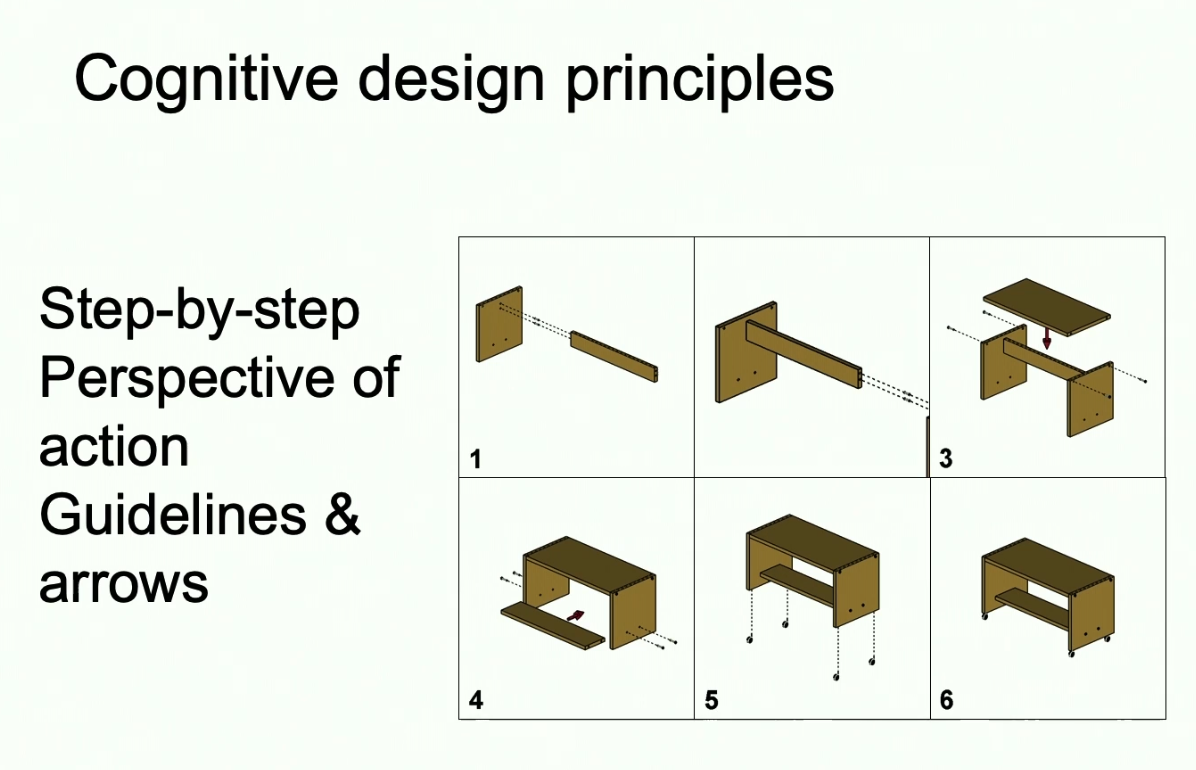
Good graphics schematize
verticality is loaded because of gravity
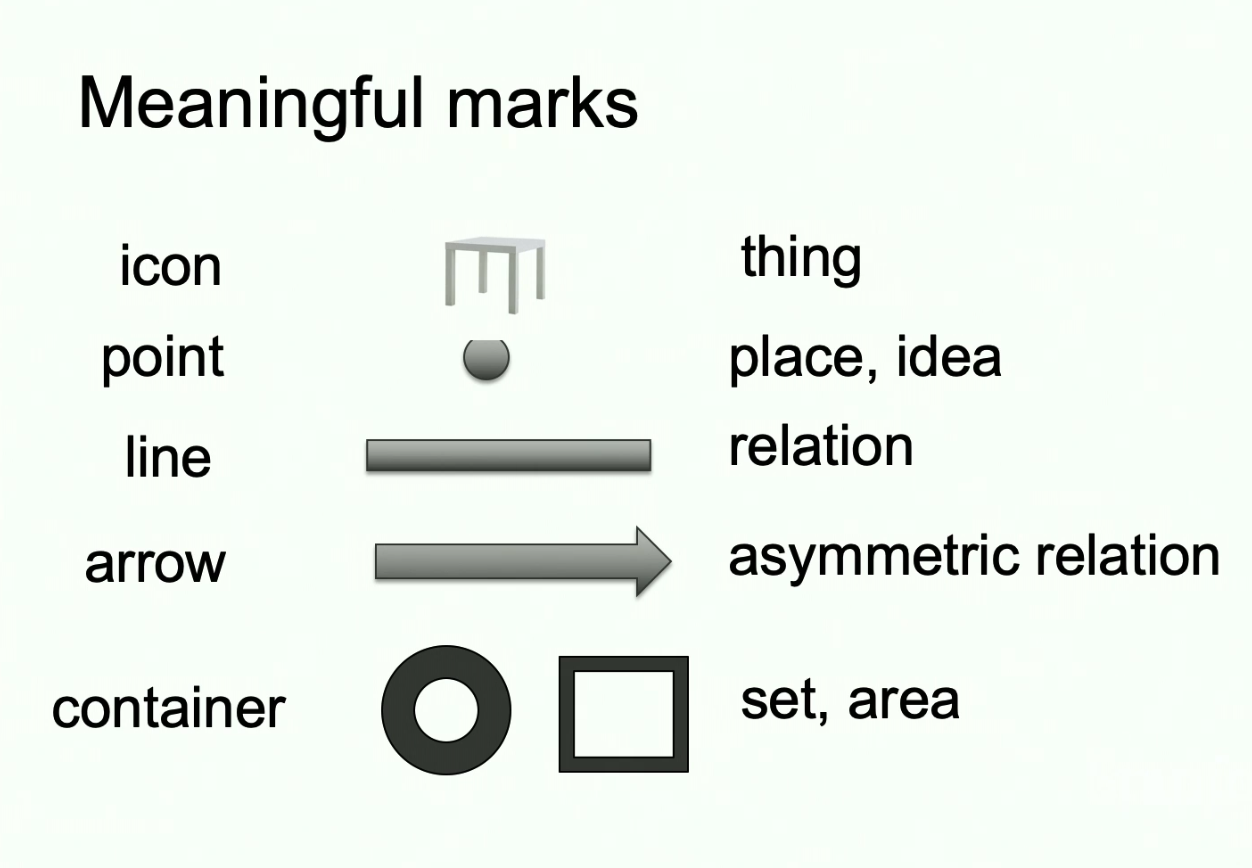
All these graphics and maps work because of context
paths and nodes are important, distance is not
Arrows dont really exist before the 21st century, but theyre great for functional descriptions
but theyre disambiguous
messy lines make ambiguity, artists say the ideas emerge from the page
Themes
we organize by themes
then er organize things as categories which go on shelves
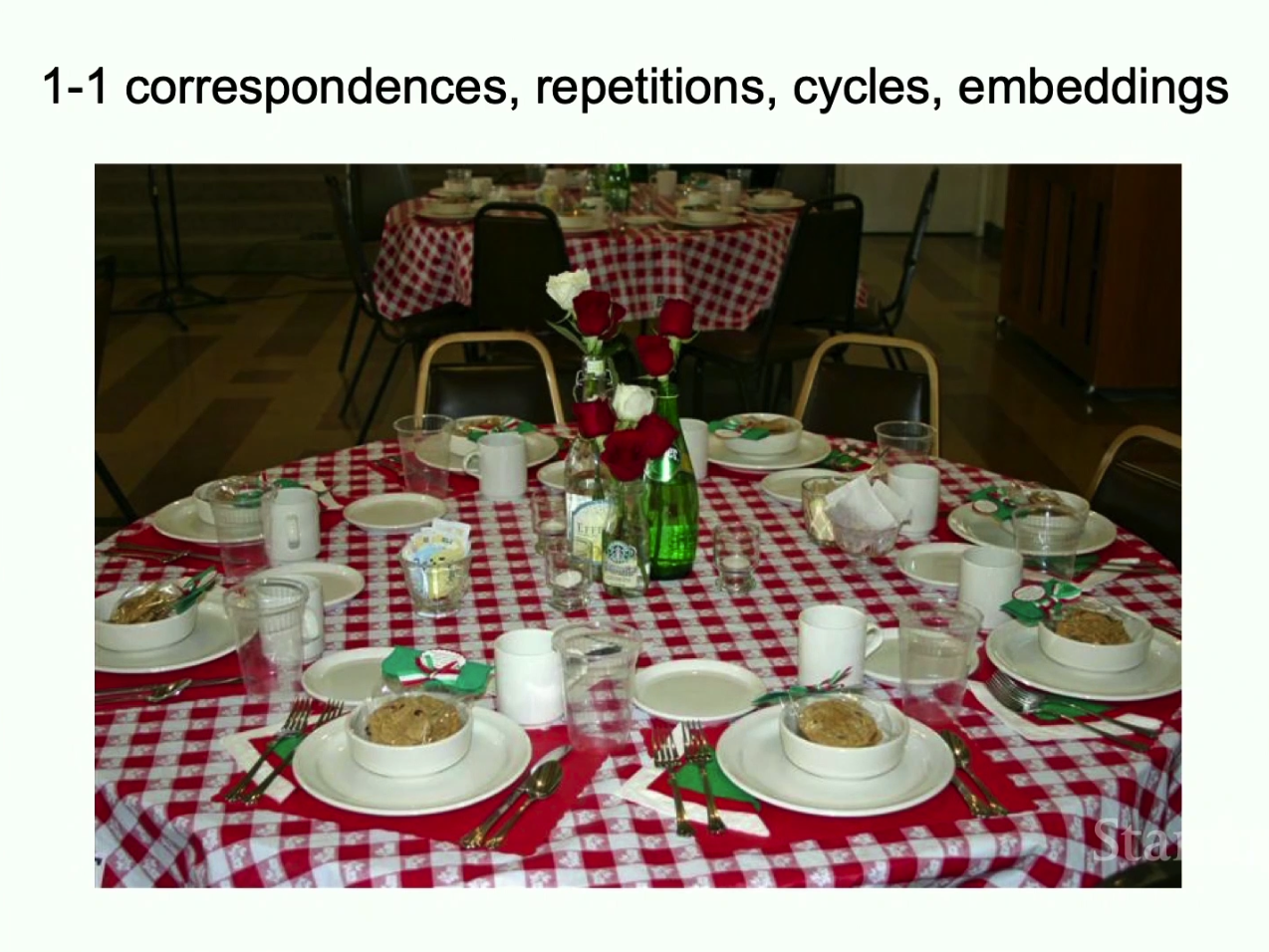
catalogs hierarchies orders boxes lines
Writing
Listen to Barbara Tversky who studies “embodied cognition” and write a short reaction.
Stanford Seminar - Mind in Motion
Barbara Tversky talks about thinking at that border of the abstract and the embodied. You are not a brain in a vat but instead use your body and the physical world to think. What practical ideas can you draw from her talk for making your interface?
I had my mind blown thinking about Mind in Motion last semester when it was referenced by Yesul Song in Intangible Interactions. At the time, I was working on MyMap with Aram and Fabri, a mental memory mapping device. For the interface I had been working on, lingering in a place meant the gps signal was more erratic and a heavier array of pixels centered around your location was colored in. The idea of this device was so that we can extend our memory into space through a fixed size map showing our previous locations. In hiking we talk about a green tunnel of foliage that the trail cuts through which can extend for several miles. In our waking lives we often encounter such tunnels first experiencing a new city where our perception of the space around us extends only to the other side of the road. So, in such a space inadequately explored, we may be lost mere blocks away from where we started.
I feel the body is deeply important for my sense of cognition. I have had this experience where things from a podcast i listened to days before pop back into my mind in the certain location I previously was. Or had similar thoughts while running a particular root, or at special places in the forest near my old house.
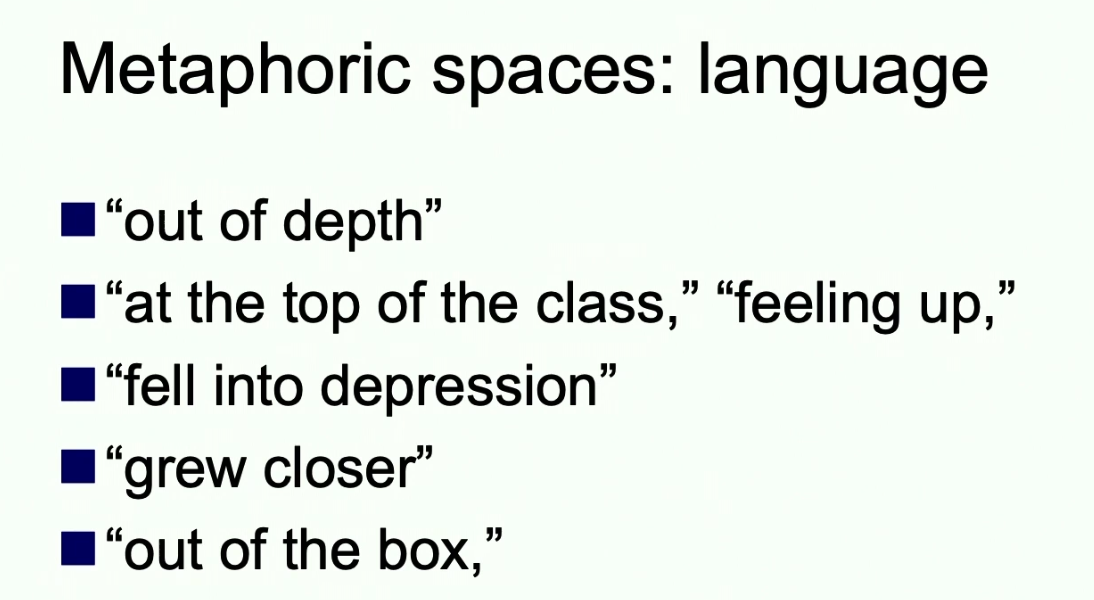
She also talks about how the same cell architecture in your brain used for physical navigation is used for processing very abstract concepts. Examine your figures of speech to see how much of your most conceptual is based on physical metaphor
Its interesting how maybe its like GPU’s are great for the parallel computing of spacial graphics and language, or whatever. I really think the mind is more spiritual. Out of my head, disembodied, Im behind on my tasks, I was engulfed by my reading, I cant stand it anymore, the feeling burned hot within me, it was the end of my rope, fallen.
Making
Create an interface the challenges your perception beyond the mouse and keyboard. Ask for more from your body. Engage it in a flow rather than a sequence. Involve your buttocks. See if you can use 1) the webcam with p5Live Media to transmit real time video and audio or 2) ML5 to track motion or 3) a VR headset with ThreeJS,a to engage your neck.
Previously in Matt Ross Touch Designer Class, I made an interface where the user raised the sun by holding their arms above their heads for 3 minutes. Inverting causality, the sun was brought up through its worship. I rewarded the user with birdsongs and an array of colors spanning the sunrise.
Lets iterate on that concept by making an interface which counts your exuberant prayers