Exploring Concepts from Soft Robotics — Professor Kari Love
Spacial Form Generator Development
Continuing my exploration into generative sculpture, I wanted to develop a spacial randomizer to create noncomputational forms in a limited 3D space.
In my early exploration of the concept, I was able to demo the idea by pulling three balloons out of my pocket, inflating them, and pressing them together. Later on, Aram and Nasif helped me film this video demoing the basic concept.
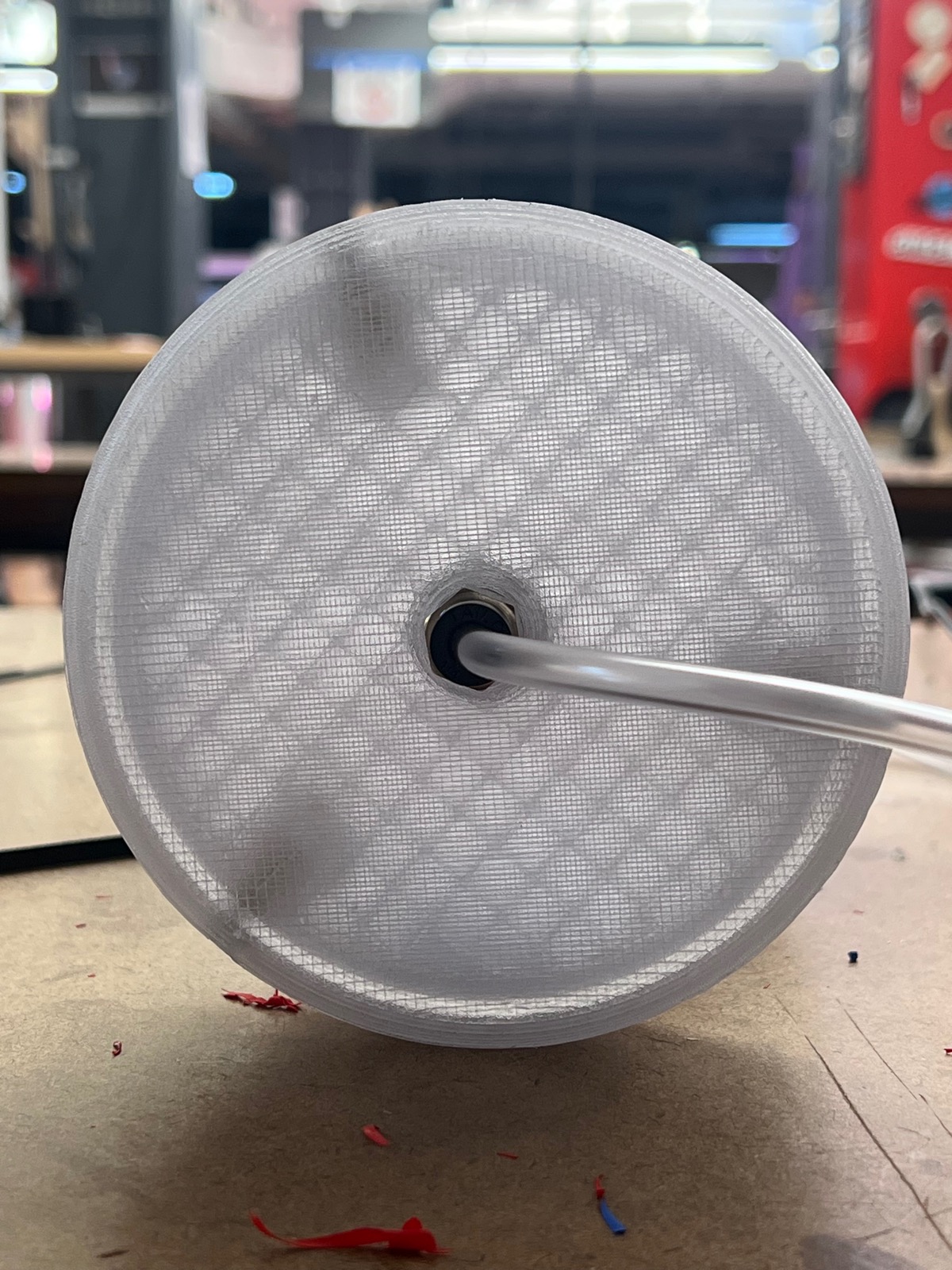
I designed this chamber to interface with 1/2in npt threaded connections. I also imbedded threaded inserts inside the 3D printed parts to keep the caps on the chamber and to be able to swap out the balloons easily.
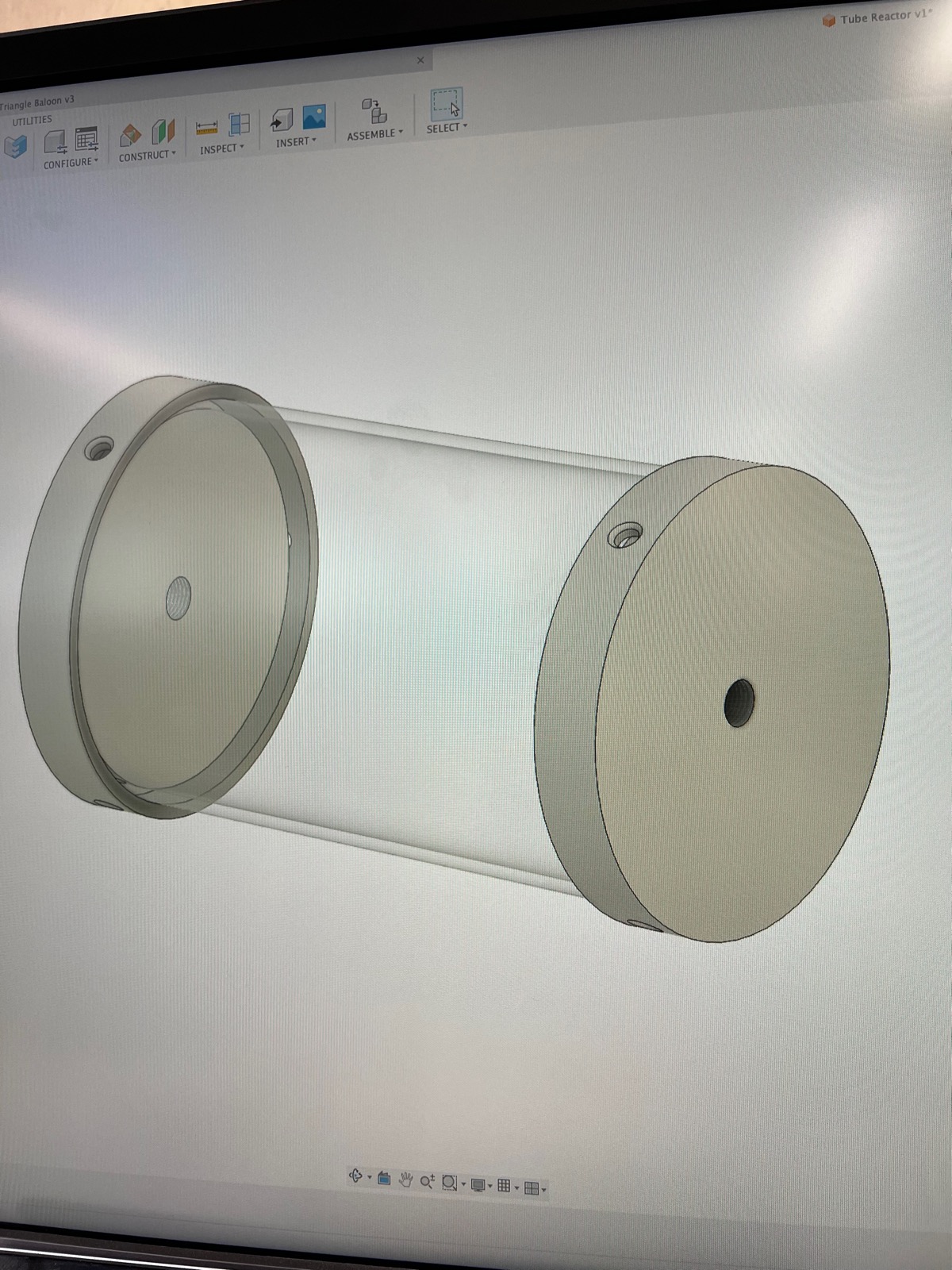
Heres how that assembly looks. Because there is no contact surface between the threaded inserts, I bonded them together with a two part epoxy.
I started the system with programmable air because its so easy to use. I configured the pneumatic lines to build up pressure in the soda bottles and then release it into the balloons. I found that when I used larger bottles, the pneumatic valves were unable to stay closed.
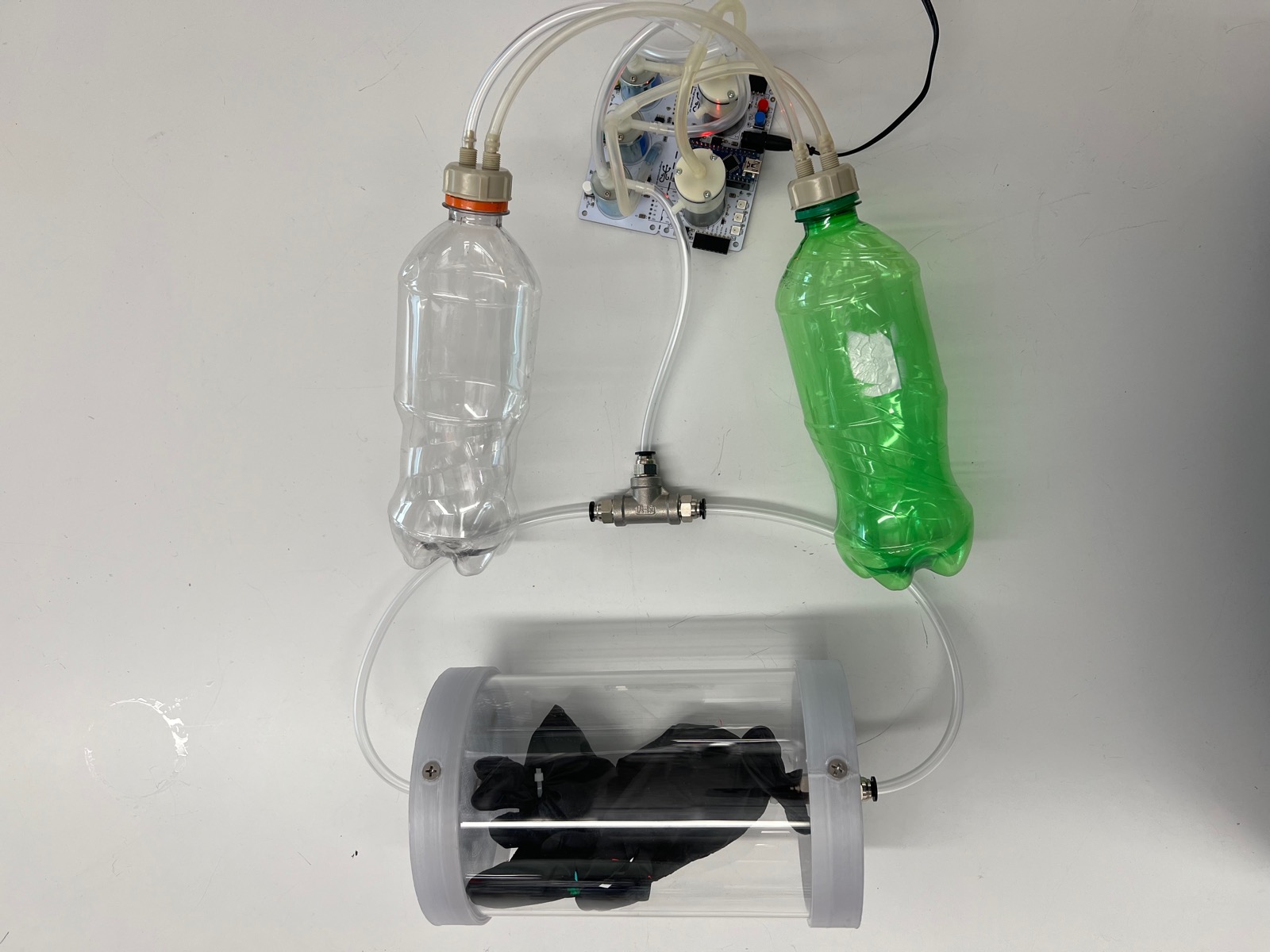
This is my favorite activation of the sculpture. The balloons I used behaved nonelastically permanently deforming after their initial activation. In this way, the forms generated were repeatable. I could have made it more random by sending two air lines in from separate pressure chambers, but this would require another set of valves, another programmable air board, or the transfer to a different system.
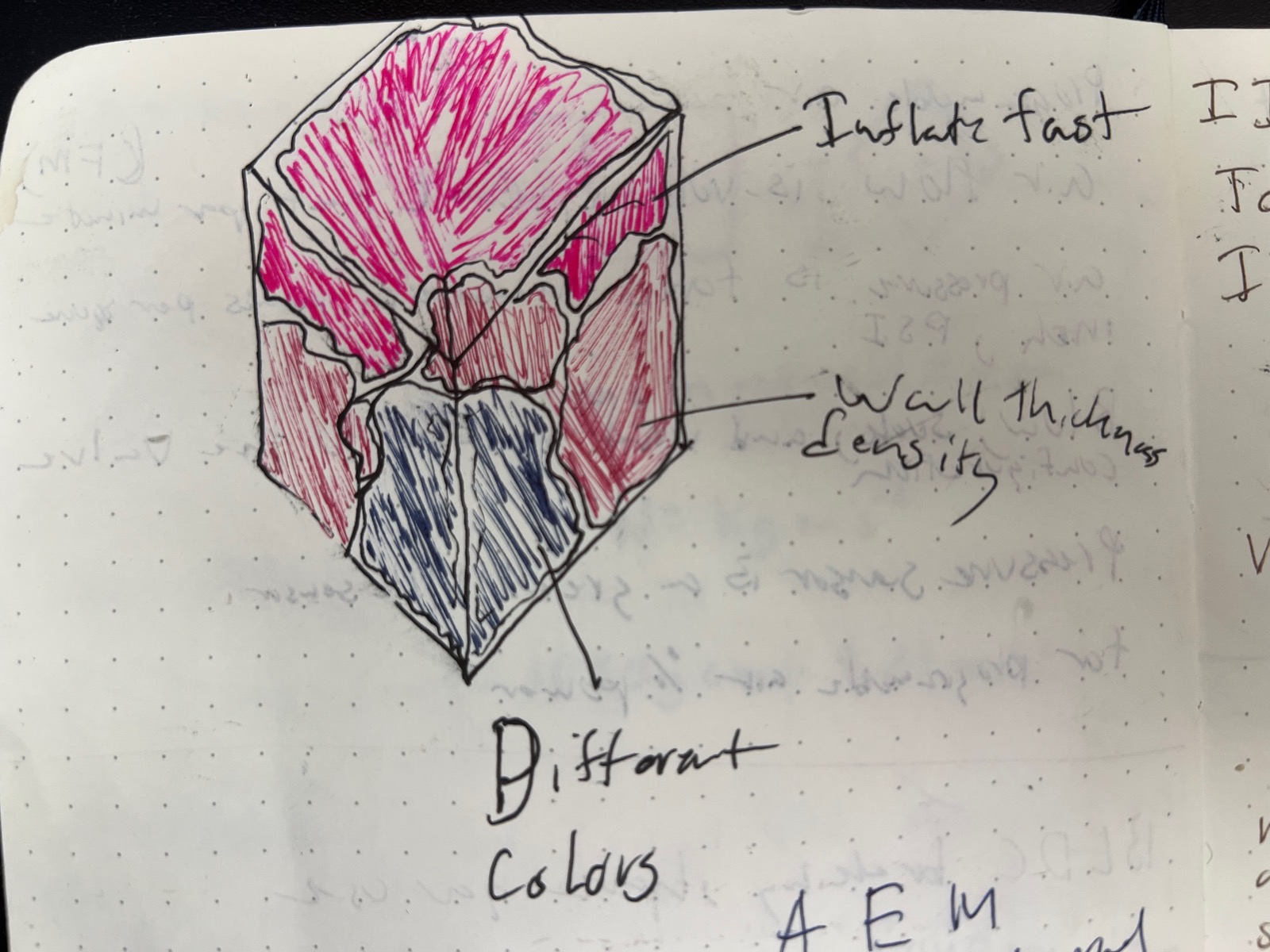
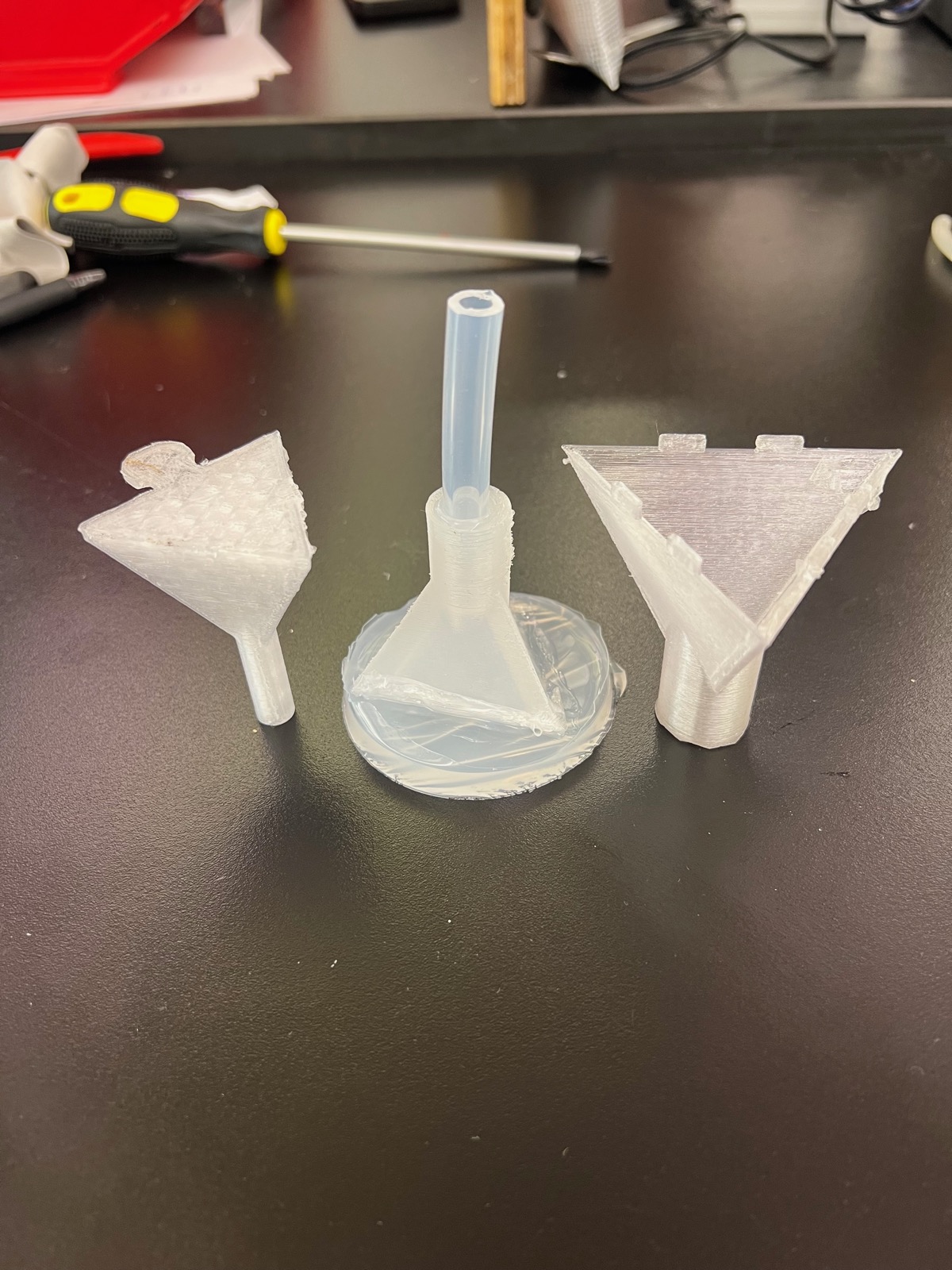
At the same time, I was pursuing other approaches to creating the desired forms. I attempted to make a form with molding and casting. Below is the outcome of that process. I cast the square funnel shape in the mold to the sides, and then placed the funnel into a small patch of silicone to marry the parts together. Previous approaches with silicone glues were insufficient. Additionally, the mating surface for mounting was a dimensional silicone tube placed into the cast and glued. because this had a lot of surface area, the glue was sufficient to hold the parts together.
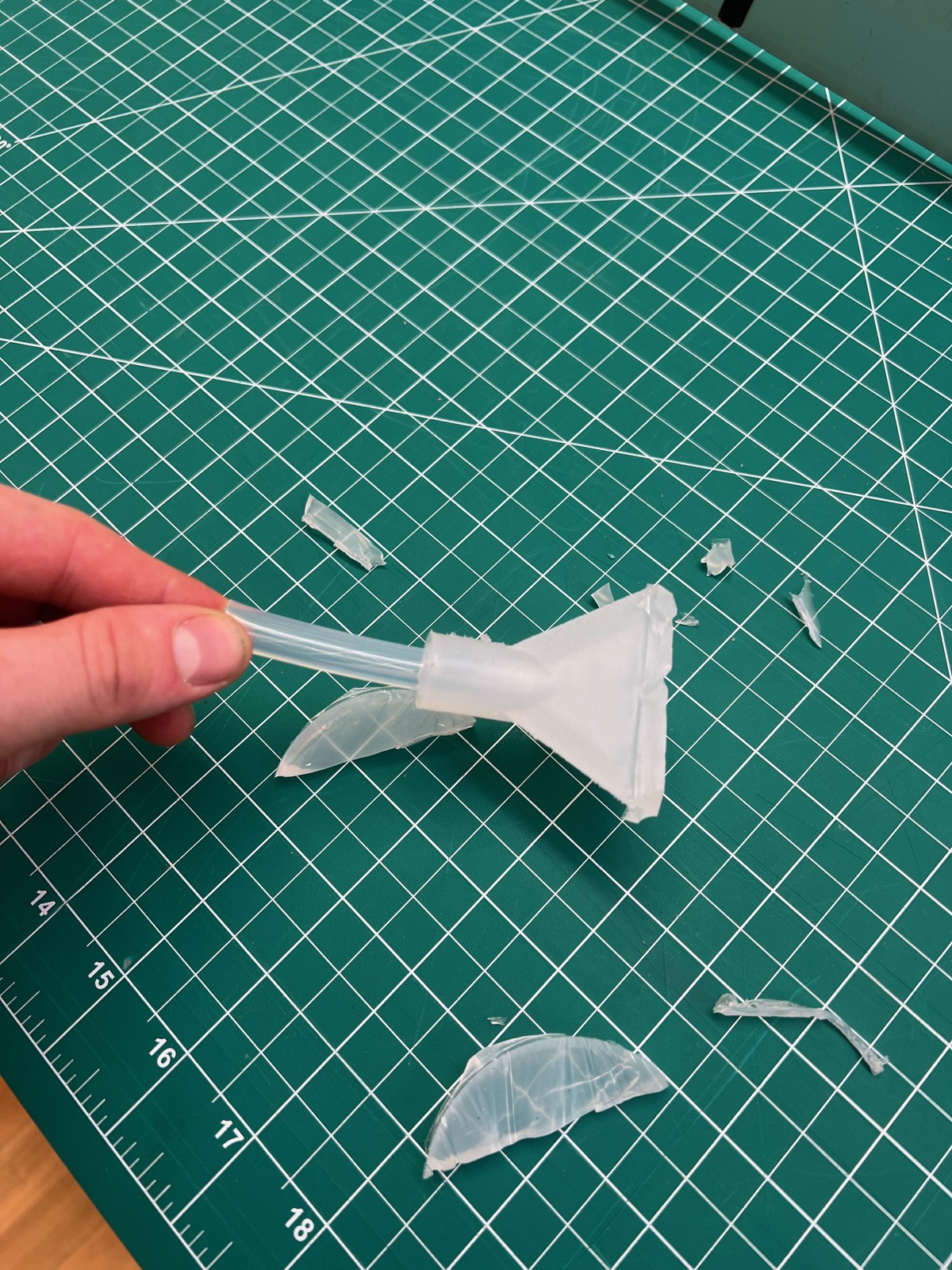
This is where I cut the edges off.
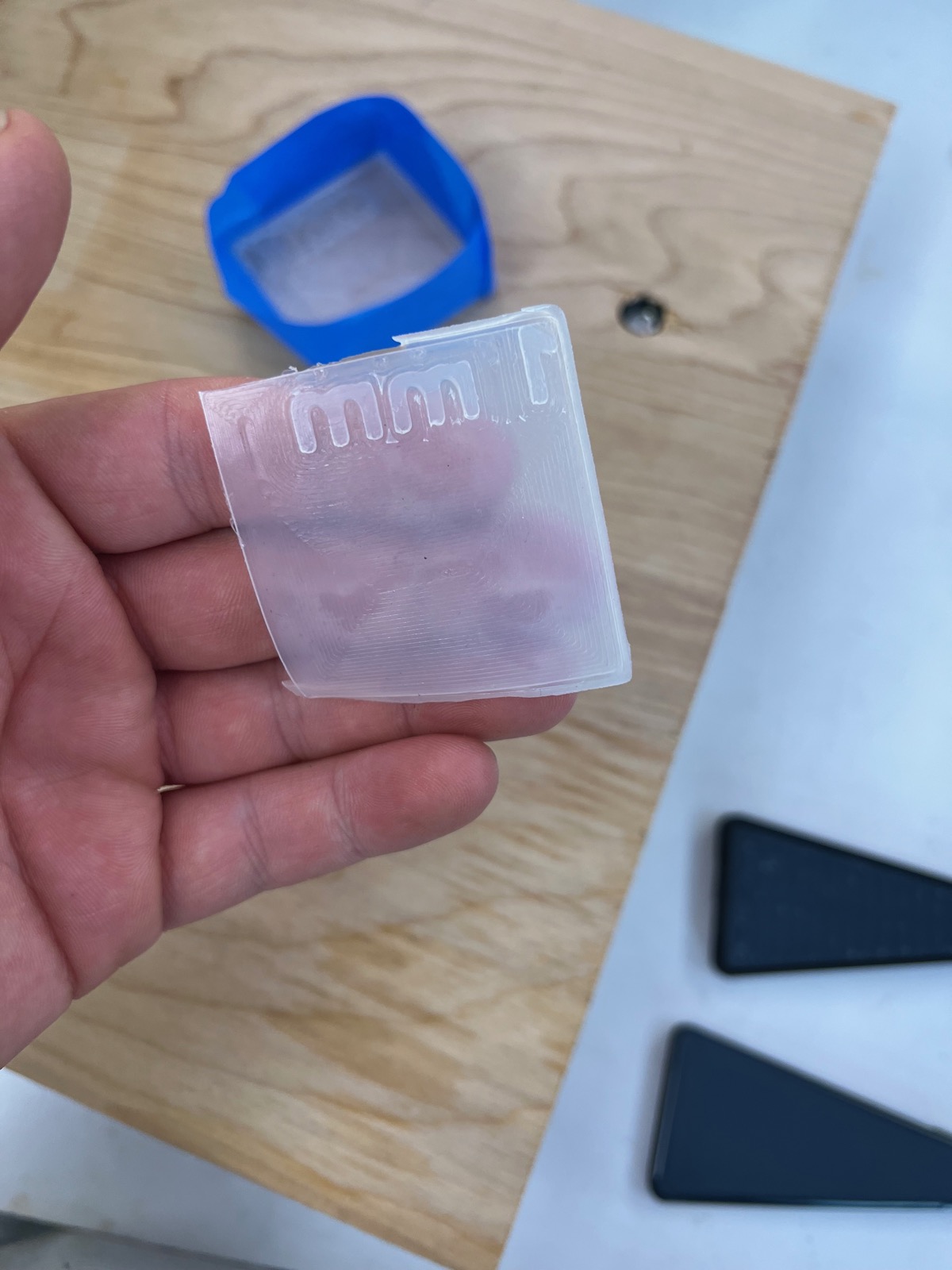
Because the thickness of the flat bottom was greater than the sides, the inflation biased the sides over the top and the expansion formed as shown in the video below.
It was difficult to create a flat level pour because for one, the material needs to be measured precisely in order to create a consistent result.
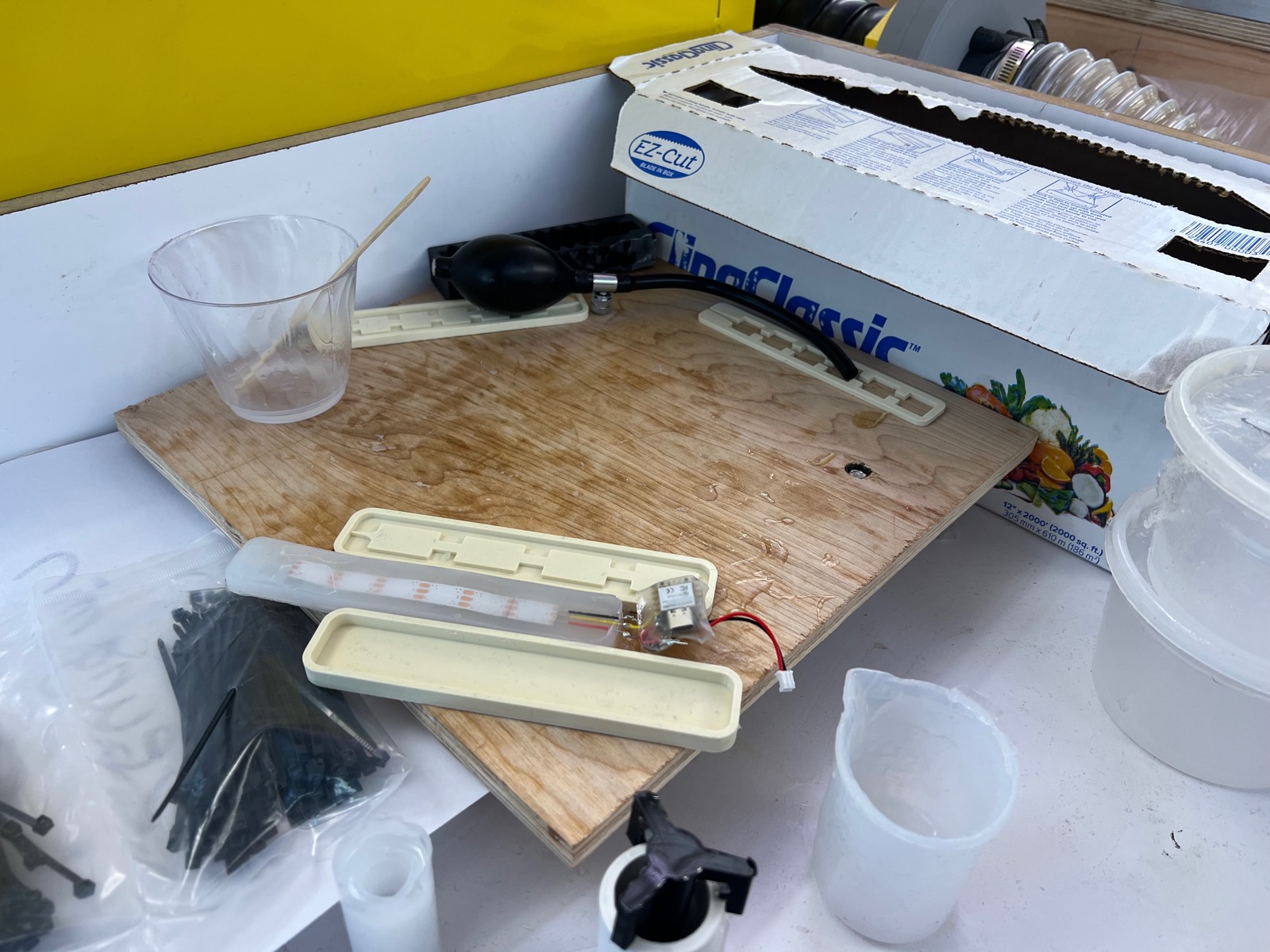
Additionally I created this three leg leveling table to ensure my pours were consistent over horizontal distance.
Going further
I am developing this project into my thesis to fulfill my initial desire for a generative sculpture, with more randomization. Pursuant to this end, I am creating a rlp printer to be able to avoid the casting process and make more advanced and consistent geometric folding forms out of silicone which avoid elastic deformation. This process is ongoing
I really like this inflatable ball stim toy, the way it uses color over its volume and creates secondary motion with tendrils.
This TikTok tomato video is also really satisfying. The way the tomato completely fills the volume is pleasing.