Thesis
Research findings + refined inquiry
Refined inquiry space
I had two conversations which impacted my thought this week. The first one was with Shloka. She really pushed me on defining determinism and brought a perspective from physics which was previously lacking. We had a good conversation about deterministic vs nondeterministic systems, vs probabilistic and non probabilistic systems. Are all physical things deterministic in nature? Or are all things indeterminate but probabilistic, or are deterministic things probabilistic? This is a question I struggle with, and I don't feel so bad holding contradictory opinions.
Google's AI response to this mentioned Alexander Calder. The famous mobiles are physically deterministic, but based on tiny invisible air currents, "impossible for a human to predict." It also mentioned non linear systems and their dependence on initial conditions. Interestingly it said that many kinetic artists since the mid 20th century tried to move towards non deterministic kinetic artwork by incorporating the viewer through interaction and through cybernetic interactions. The artist mentioned here was Nicolas Schöffer.
For me, the outcome of our conversation was the realization that I don't believe in deterministic physical systems, that deterministic idealism is a reliance on probabilism. You can use a deterministic physics model like dynamics to study the motion of a car through space, or to determine the heat through its engine, but as we break these down, the simulations which we use for complex interactions like thermodynamics are simply probabilistic. There is no atomic simulation, except by atoms as themselves.
I had another good conversation with Antonia in light of this one, about relating this to my artistic practice.
- How: through objects exploring generative movement against the laws of deterministic systems
- What: in order to investigate the Lacanian aesthetic in its spiritual dimension (desiring machines) through art. To investigate the limits of physical reality through technologies like telepresence
- Why: to expose the gap between conventional or popular knowledge and the knowledge beyond, encased in true reality
Creating indeterministic systems.
An idea I find attractive is something from Kevin Kelly (CIA Kelly): the fastest way to see what a seed will grow is to sprout it. He's referring to neoliberal economic reform here, but I still agree.
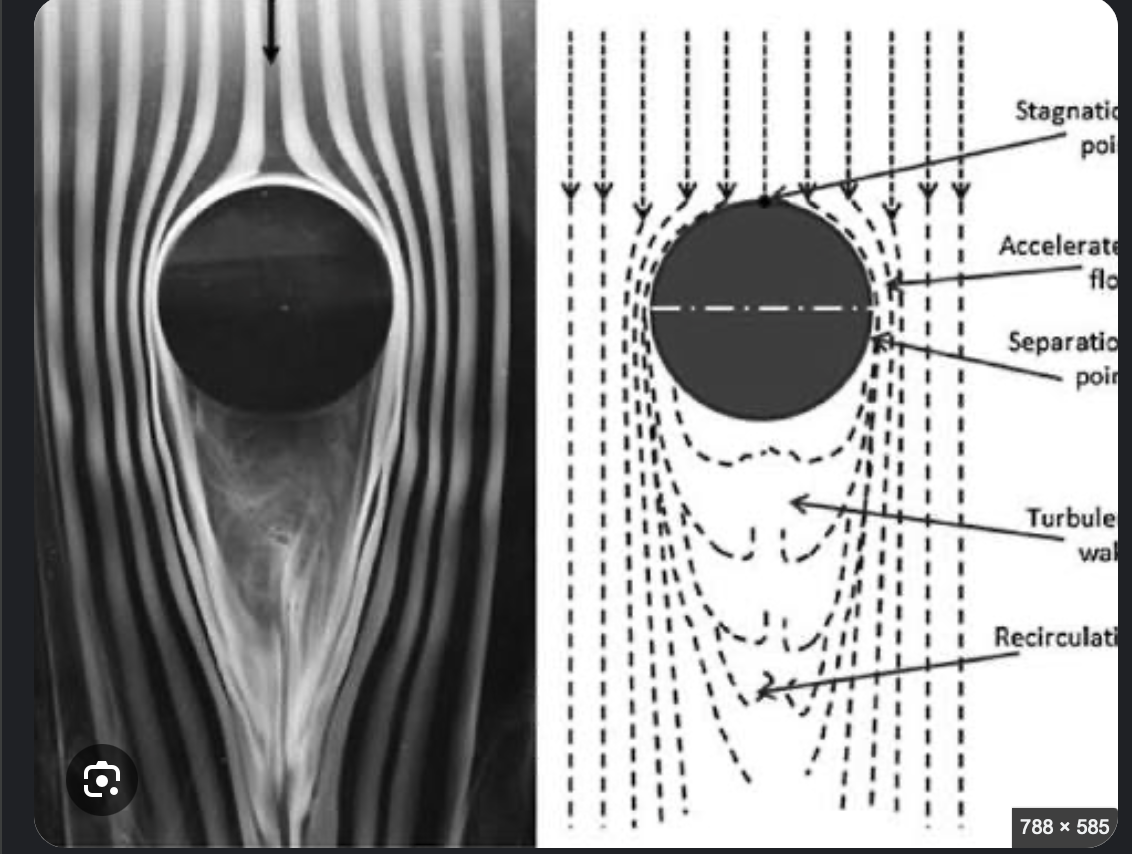
The best way to simulate reality is reality. Examples being the Mississippi River Basin Model or wind tunnels.
I also had good conversations with Pedro, Tanika, Sarah, and Yessul.
- Pedro: Figure out a why for every aspect of your sculpture, at least have one. Also know what you don't want to do in your last semester.
- Tanika: HOW, WHAT, WHY
Sarah: A sculpture might get meaning from an artist's practice largely. A lot of artists make meaning through their body of work, ex. the goat Molly Soda. You can't put pressure on your thesis to explore everything. The thesis is the question I want to answer, then the project is why.
How can I write my words into questions that start with:
- How can I blank blank blank
- How can I use the blank of these sculptures to trouble how people relate to matter
- Or take another person's very specific thesis (Vibrant Matter) and encapsulate it in a form
- What is the language I can develop inside a set of materials and techniques? Take it as an exercise, make a thing for a thing.
She also mentioned Against Interpretation by Susan Sontag, a book Antonia referenced to me a while ago while I was complaining about Hito Steyerl's book Duty Free Art or whatever and its post Zizekian analyslop.
Art as having sublime possibilities. That which cannot be put into words is something which is artwork. I agree with this in a way. Tanika has previously said I should make a work which slaps you in the face with literalism. I kinda hate that idea, but my work has been so obscure in the past. I need both.
The artwork All Day All Night by Christine Sun Kim was mentioned: its use of inflatables and the dynamic possibilities of form for such, their lending to interpretation, the evocative but not overly literal nature of it.
Another final thing: look at how other artists working in my same mode create work, then apply the framework observe, analyze, interpret, evaluate (judge).
- Observe: just look
- Analyze: how does it relate?
- Interpret: rooted in these observations, here's how I think I am responding this way
- Evaluate (judge)
It's a way to unpack the mystery of why something makes you feel a certain way.
After all this, I feel like what I'm interested in is the way that intelligence in space creates indeterminism. Intelligence being something which occurs molecularly. Desire being this thing which arises from the intelligences of physical things as systems, this way to supplant our rationalist word back into this universalist mind state, this perfect calculation of matter, this unknowing unconscious becoming of form in the world through collective participation in God's mind. This space for free will we carve out when we act for and against our desire instead of passively being swept along. This Action.
Research by making
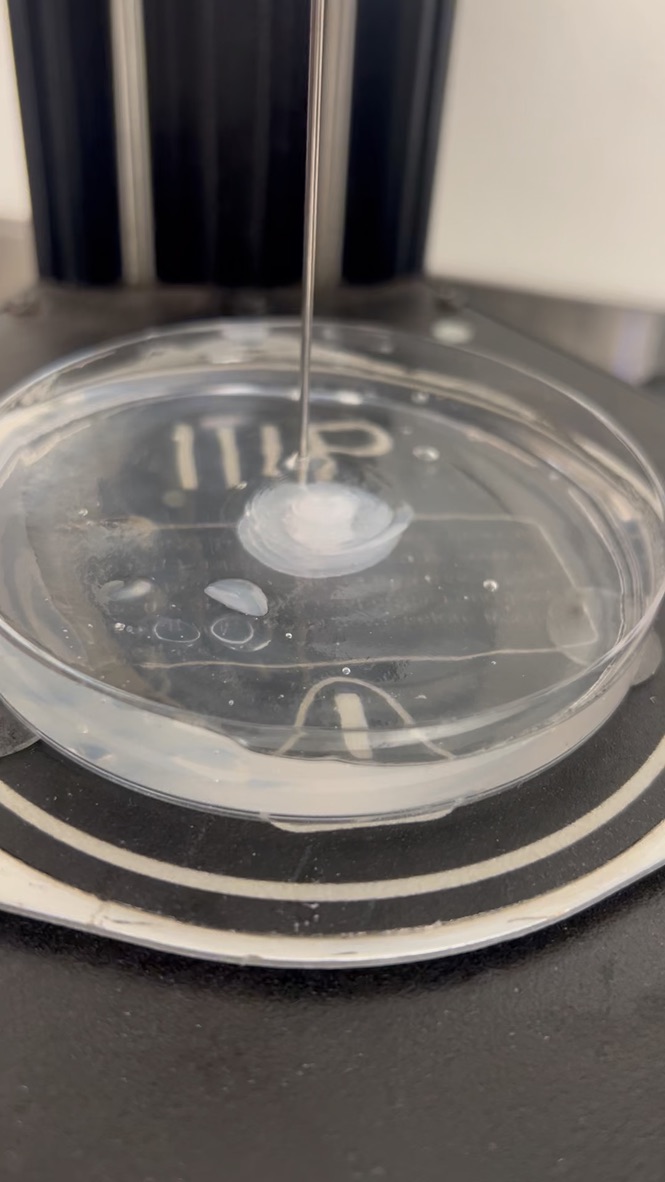
On the 1st, I followed through with a production goal, to print into the new gels Matt had prepared. This test took place in a petri dish. I think it could have gone better if there was less pressure needed in the line. I also found out that it's hard to reuse cartridges, which makes them a consumable. I found 100 for $120 on AliExpress, I need to order that asap. Even just for me. I also need to mount the pressure gun onto the wall, and shorten the path the material comes through. This should give it more pressure to form into a solid bead and displace the elastomer gel.
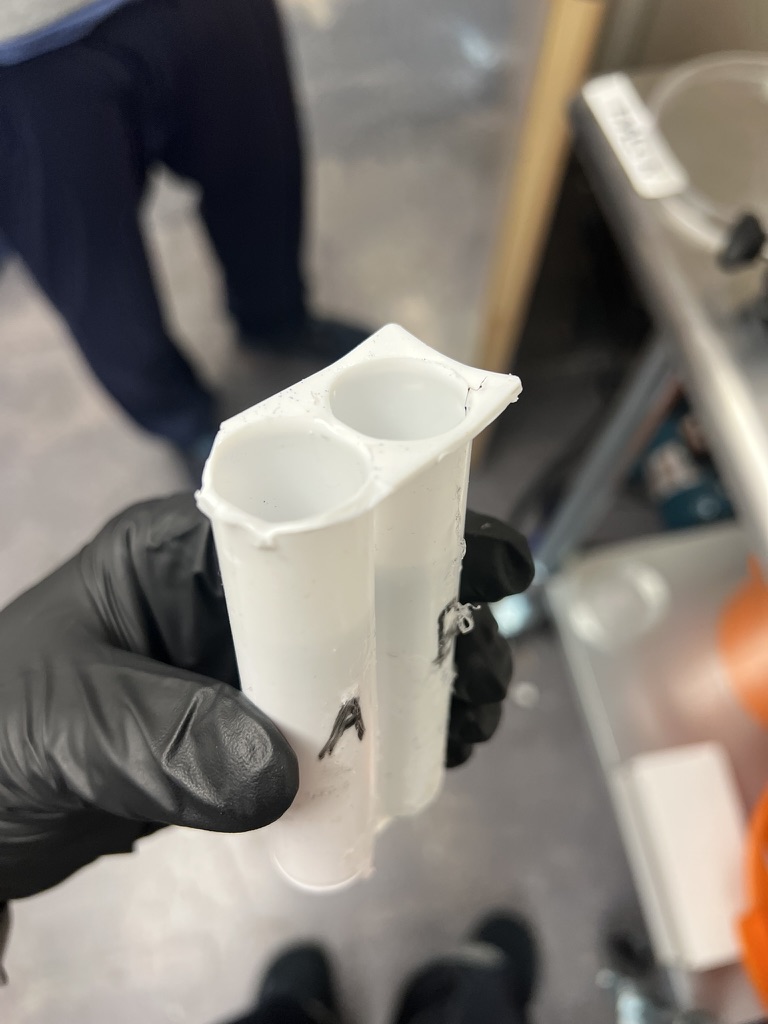
I put the pressure too high and my cartridge ruptured, destroying the batch of silicone I had loaded. The pressure flying out crashed it into the wall and smeared silicone everywhere. Thank god I have a table for it now.
That's the other big win, I got a table to keep messy.
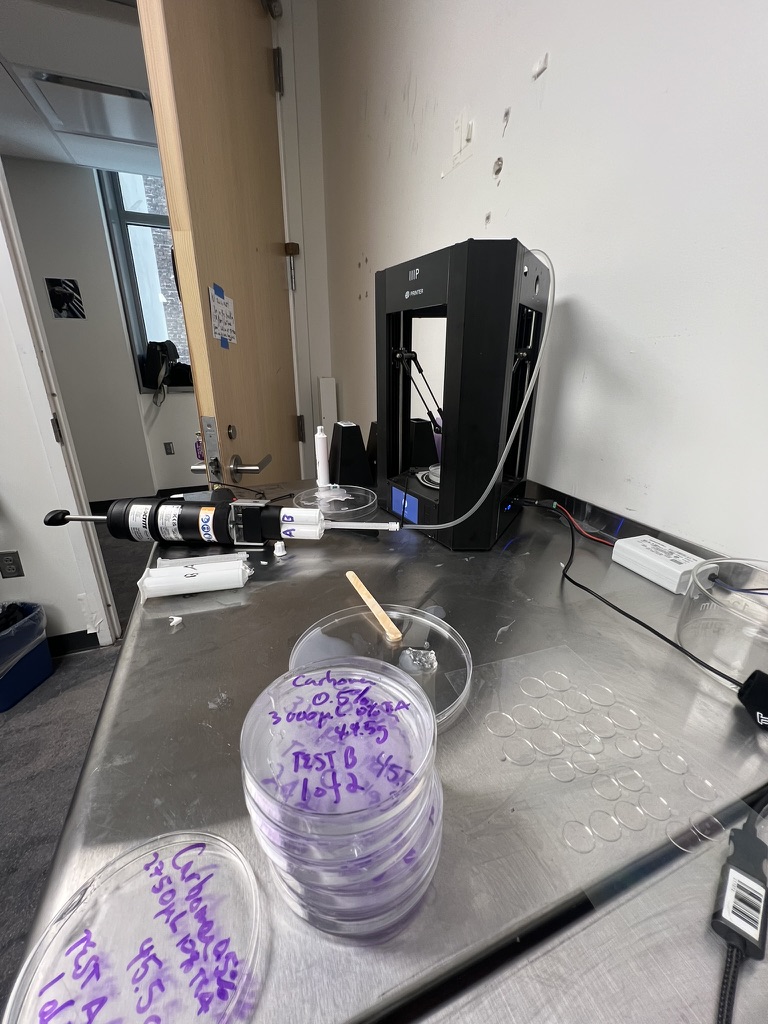
Fabrication goals:
- Purchase more containers.
- Ask for more silicone.
- Mount the pressure gun onto the wall.
- Shorten the path the material comes through.
I had one more test before this on some slopped together 0.5% w/v elastomer which produced this. It's a full print which took place on top of the gel. It didn't go down all the way, which was unfortunate; I had z-zeroed it wrong. The noodle on top is the result of spraying out the silicone line with an air hose. The shape is compelling and worm like. It feels very well cast. I would love for this byproduct form to end up in my final result as some kind of secondary motion.
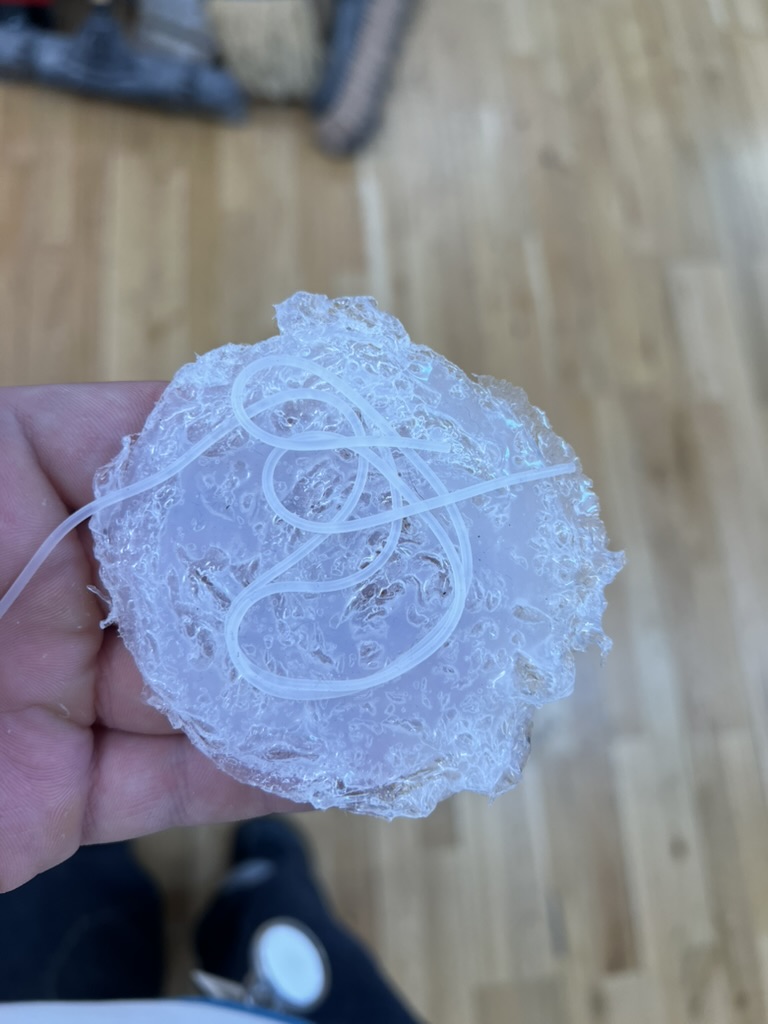
I am feeling like I want shapes to appear and disappear in the tightly knit forms of the cube.
I brought my pneumatic equipment to ITP so I can begin experimenting with controlling balloons. Just for fun. But now I need a tank for negative pressure as well.
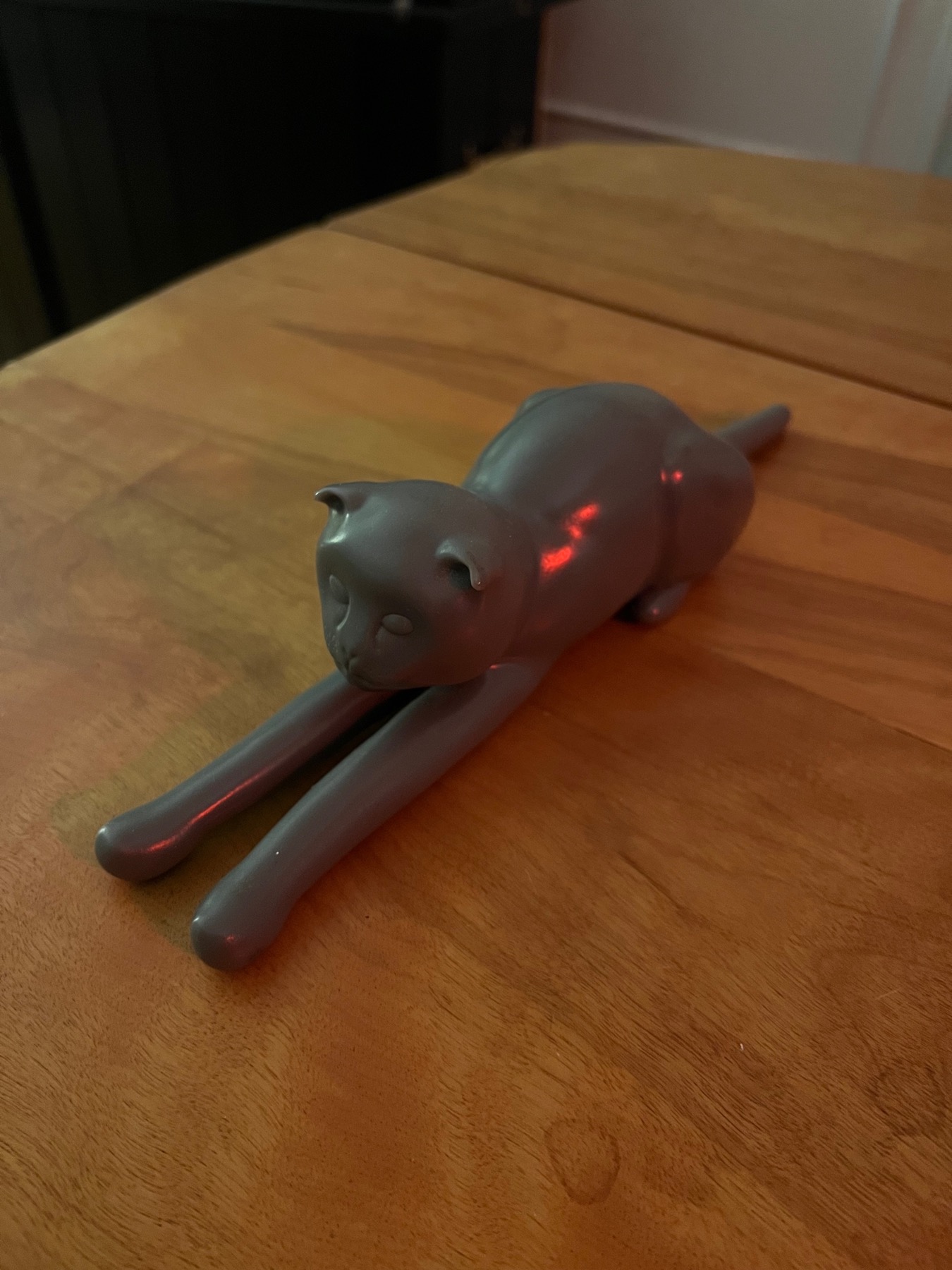
I want to take this as an opportunity to do more digital sculpture, like this one of my cat.
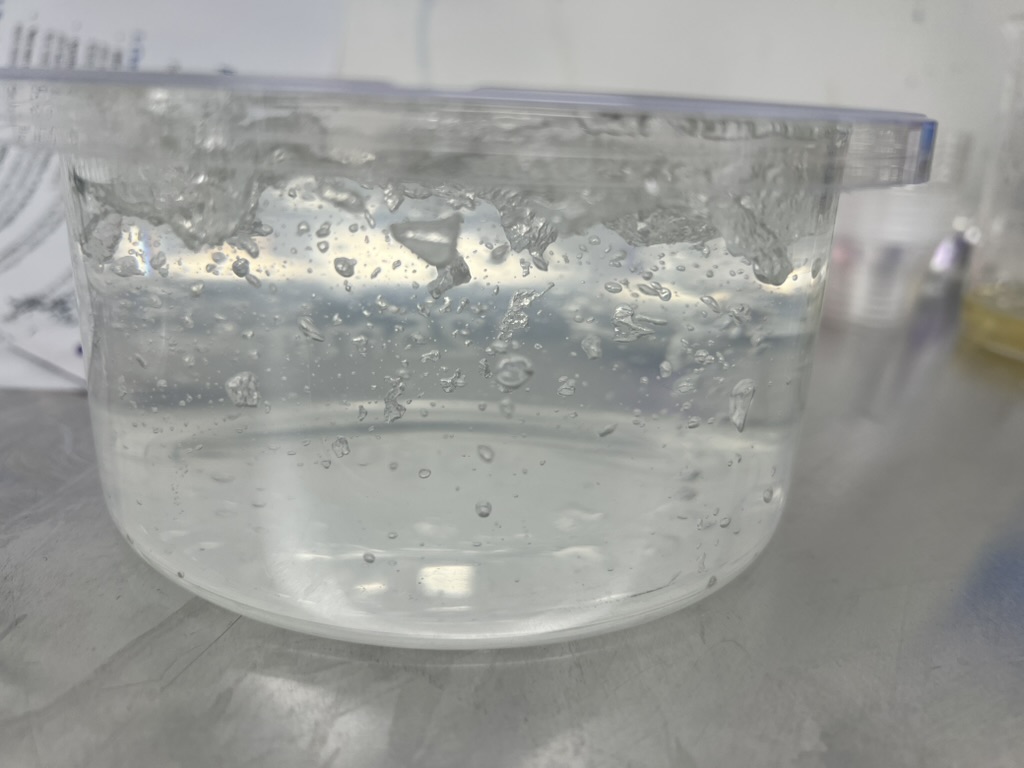
Next I get to print into this amazing clear elastomer that Matt made. This is the full build volume of the printer, so if I can print in this, it should be as far as I can go for now. I should do a print a day.
I had been producing a Blender geometry nodes setup, and I passed it into Claude for it to fix my math, and it did a great job. I am excited to see what Claude can do for geometry nodes toolpathing, because it's really wonderful to be able to tweak the settings in the nodes after the fact. Very easy to control. It would be great if I can get it to turn meshes into spirals. I will try that next.
I put my hand into this bucket of rice, and feeling it move through my fingers, the way the rice runs down head first into gaps that form as I lifted and manipulated it, felt like a sculpture.
Reading
Three readings which stuck with me.
Rodney Brooks, Intelligence without Representation
(C) When we examine very simple level intelligence we find that explicit representations and models of the world simply get in the way. It turns out to be better to use the world as its own model. (H) Representation is the wrong unit of abstraction in building the bulkiest parts of intelligent systems. (p. 1)
The abstraction reduces the input data so that the program experiences the same perceptual world (Merkwelt in [15]) as humans. Other (vision) researchers will independently fill in the details at some other time and place. I object to this on two grounds. First, as Uexküll and others have pointed out, each animal species, and clearly each robot species with their own distinctly non-human sensor suites, will have their own different Merkwelt. (p. 3)
With multiple layers, the notion of perception delivering a description of the world gets blurred even more as the part of the system doing perception is spread out over many pieces which are not particularly connected by data paths or related by function. (p. 6)
Simon [14] noted that the complexity of behavior of a system was not necessarily inherent in the complexity of the creature, but Perhaps in the complexity of the environment. He made this analysis in his description of an Ant wandering the beach, but ignored its implications in the next paragraph when he talked about humans. We hypothesize (following Agre and Chapman) that much of even human level activity is similarly a reflection of the world through very simple mechanisms without detailed representations. (p. 7)
Amazing genius.
Jane Bennett, Vibrant Matter
Vibrant Matter had this beautiful quote. I only read chapter one but want to read more.
In this assemblage, objects appeared as things, that is, as vivid entities not entirely reducible to the contexts in which (human) subjects set them, never entirely exhausted by their semiotics. In my encounter with the gutter on Cold Spring Lane, I glimpsed a culture of things irreducible to the culture of objects. I achieved, for a moment, what Thoreau had made his life’s goal: to be able, as Thomas Dumm puts it, “to be surprised by what we see.”
In this old picture I took, the leaves are stacked by rain water just so.
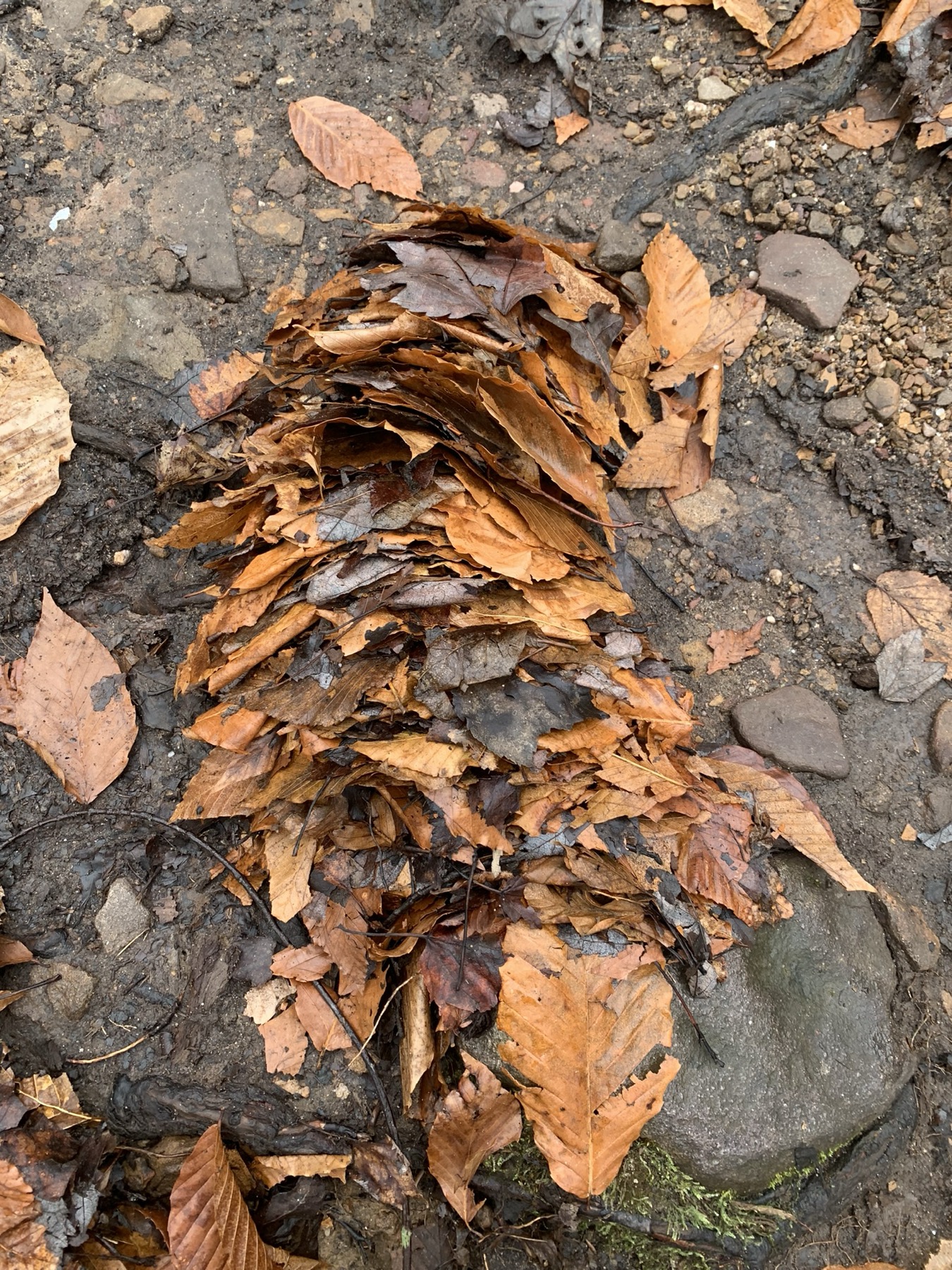
Or these rocks on the beach.
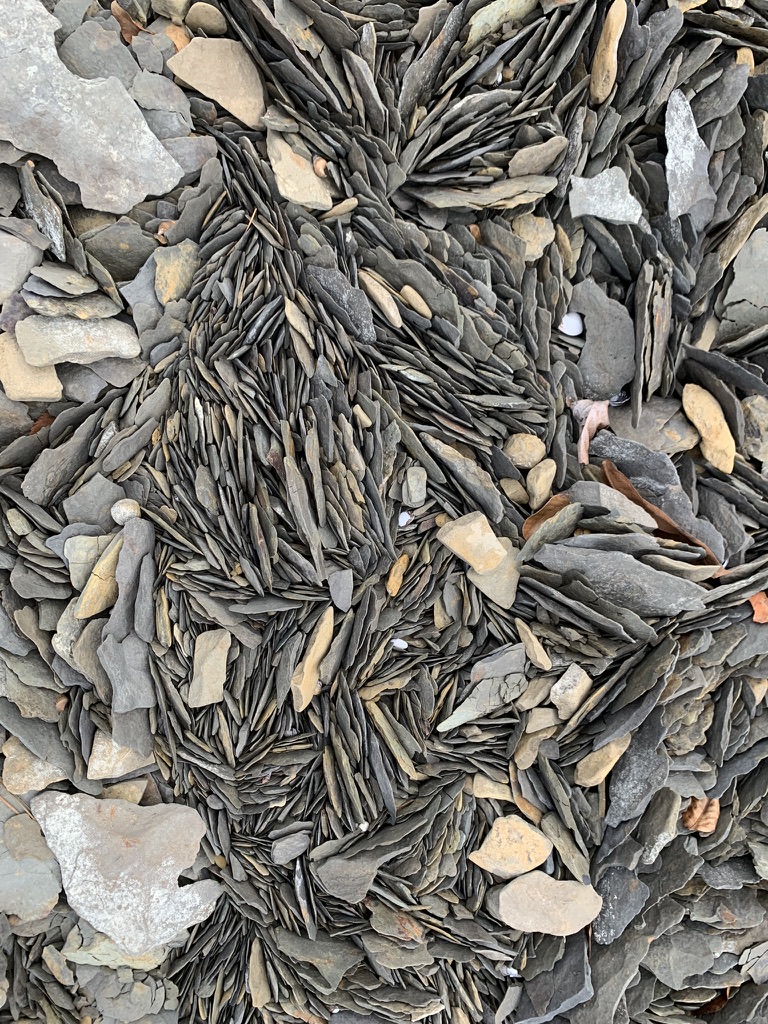
Tell me this is not matter infused with desire.
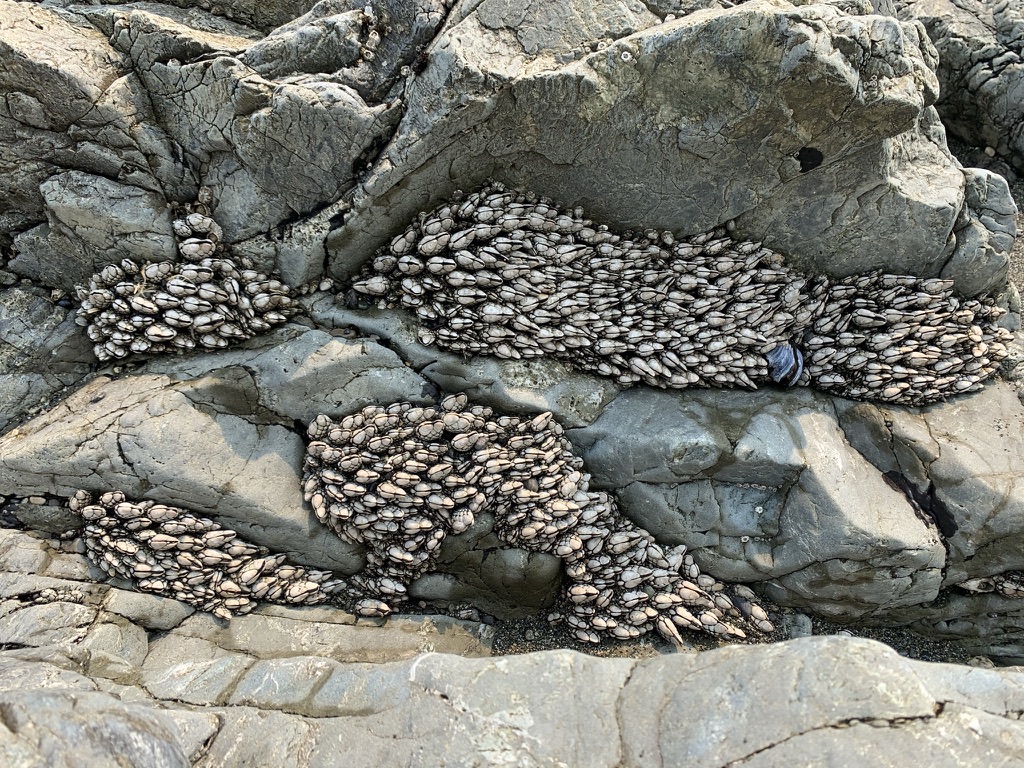
Animal life but just barely.
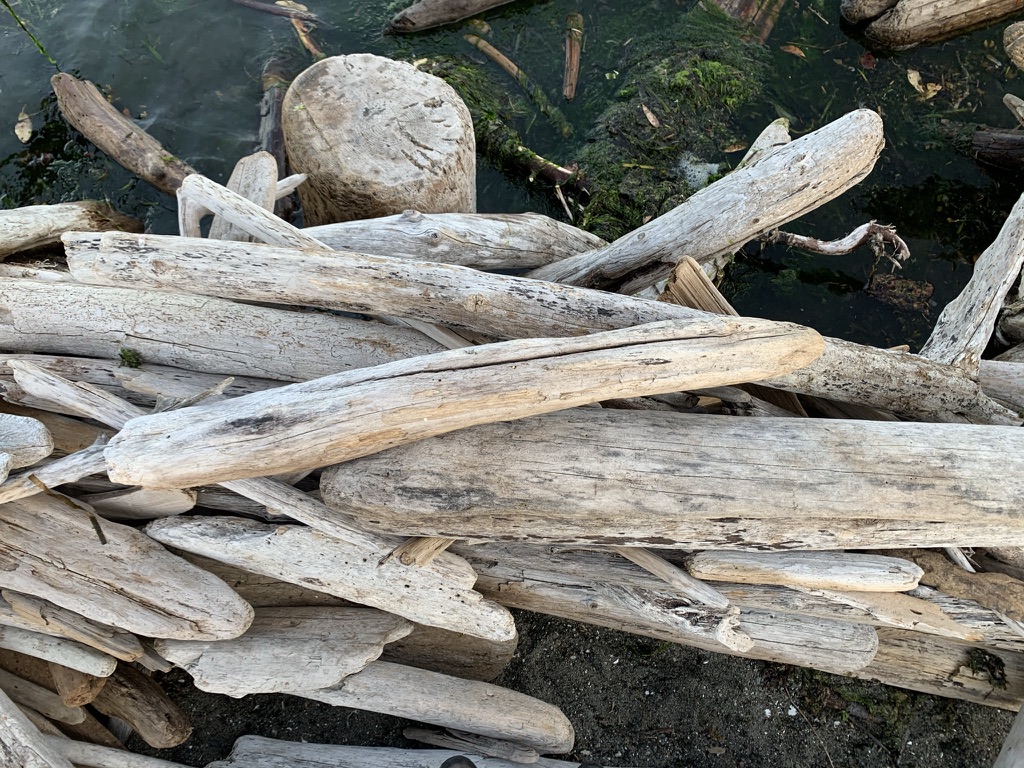
Unconscious stacking.
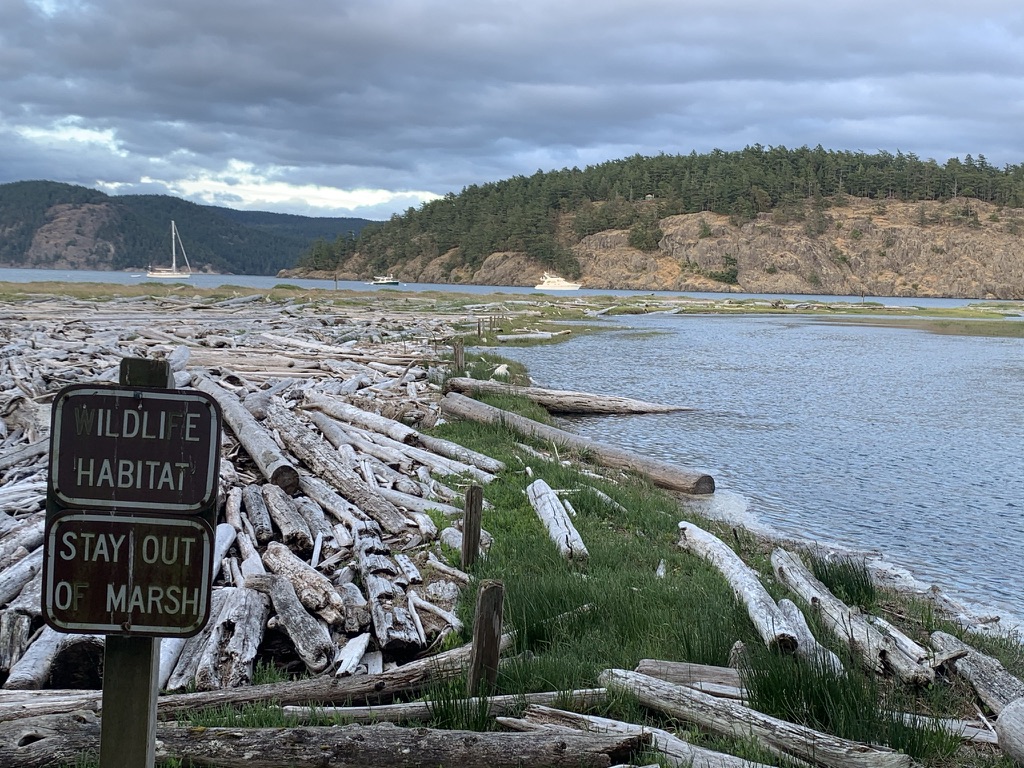
Whole ecosystems form this way.
Jack Burnham, Beyond Modern Sculpture
I also started to read Beyond Modern Sculpture, but it's harder to pull quotes from. It's very important background on modern kinetic work. Chapter 8 discusses this, which is really exciting for a book from 1968.
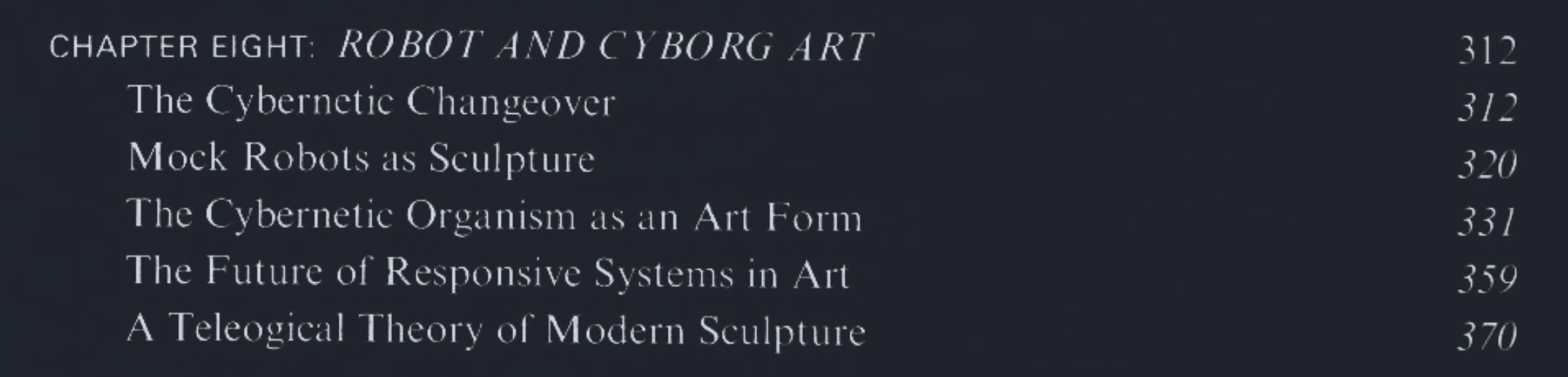
Two words stuck out to me in the intro: the struggle of Kunstwollen against Kunstmaterialismus. Art as created purely of artistic condition vs art as interpreted in light of its material conditions. This struggle played out before the year 1900 in Germany.
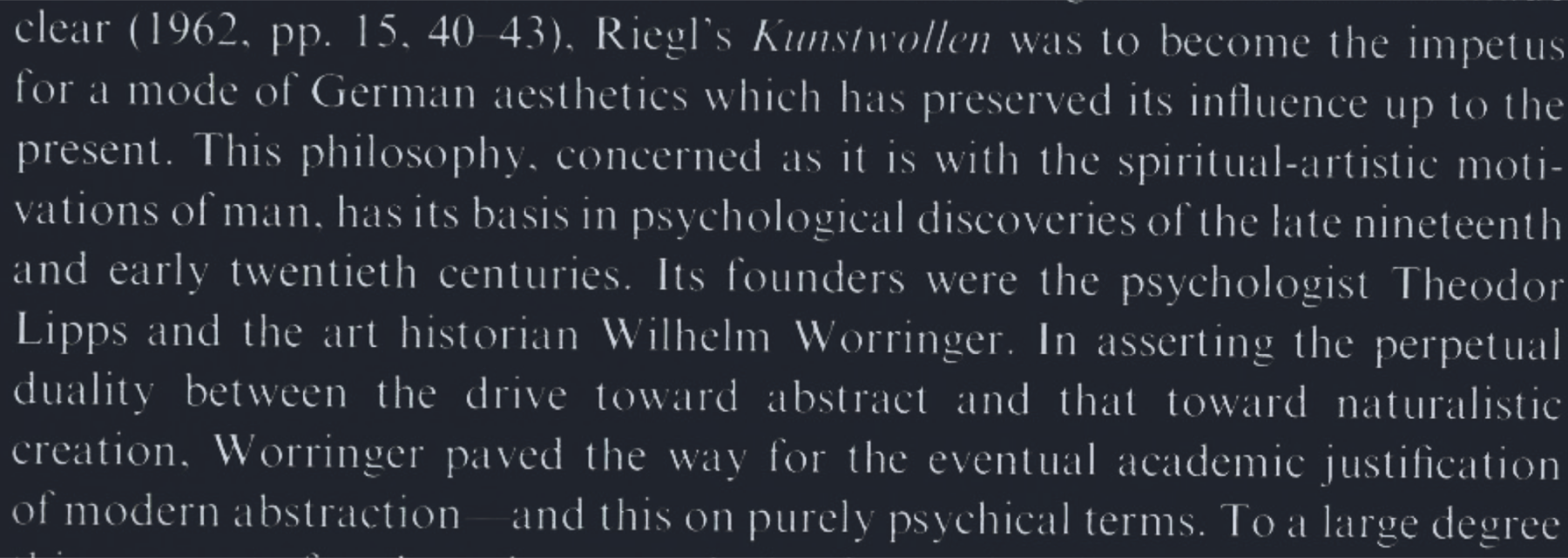
We gotta do better than Kunstwollen, no matter what those folks in Cologne say.
“Idealism in any shape or form does not die easily.”
Experts to reach out to
- Michael Candy, on intelligent robots. I want to get coffee with him and talk robots and spatial intelligence.
- Anne Fresh, inflatable forms. Matt said she's really good with inflatables.
- Skylar Tibbits, silicone. Or maybe someone else at the Self-Assembly Lab. They might not want to talk to me because they did a startup.